This comprehensive guide breaks down exactly how you can dominate app marketing on mobile. You will discover actionable techniques for App Store Optimization, user acquisition, and engagement. By the end, you will have a proven blueprint to maximize organic downloads and retain your most valuable users.
To succeed today, you need to master app marketing for mobile. This guide delivers the strategies required to skyrocket your app’s visibility and drive massive installations.
Understanding the Landscape of App Marketing Mobile
To truly master app marketing mobile, you must first understand the ever-changing ecosystem of the Apple App Store and Google Play Store. The mobile landscape is intensely competitive. Millions of applications vie for user attention, and simply publishing an application is no longer enough. App marketing mobile requires a holistic approach that bridges the gap between pre-launch anticipation, aggressive launch strategies, and sustainable post-launch retention.
In recent years, the integration of artificial intelligence and machine learning into app discovery algorithms has transformed how users find software. Search intent is evolving, and generic keywords are giving way to long-tail, contextual queries. Marketers must adapt by blending traditional marketing techniques with data-driven insights. By deeply analyzing your target audience and leveraging cutting-edge analytics, you can craft a strategy that not only attracts users but converts them into long-term brand advocates.
Pre-Launch Strategies: Setting the Stage for Success
Before you even think about app marketing mobile post-launch, your pre-launch phase must be flawless. A successful launch relies heavily on the momentum you build before the application hits the digital shelves.
Conducting Deep Market Research
Start by analyzing your competitors. Look at the top-performing applications in your category. What keywords are they targeting? How do they structure their descriptions? Use tools to analyze competitor review sections to find common complaints. By solving the problems that your competitors ignore, you instantly create a unique selling proposition.
Building a Beta Community
Engage potential users early by launching a beta testing phase. Create a landing page to collect email addresses and offer exclusive early access. This not only helps you identify bugs but also builds a loyal community of early adopters. These users are often the first to leave positive reviews on launch day, giving your app marketing mobile efforts a crucial initial boost.
Crafting Your Buyer Personas
Understanding your audience is the cornerstone of effective app marketing mobile. Create detailed buyer personas that encompass demographics, interests, pain points, and device preferences. If you are launching a fitness application, your persona might be a busy professional looking for quick home workouts. Tailor your messaging to address their specific needs across all your marketing channels.
App Store Optimization (ASO): The Engine of Organic Growth

App Store Optimization is the most critical component of app marketing mobile. It is the process of improving your application’s visibility within the app stores, increasing organic download rates, and reducing overall user acquisition costs.
Keyword Research and Implementation
Thorough keyword research dictates how easily users can find you. Use dedicated ASO tools to identify high-volume, low-competition keywords. Place your primary keyword, such as app marketing mobile, strategically.
- App Title: Include your most important keywords here. The title carries the heaviest weight in search algorithms.
- Subtitle/Short Description: Use this space to highlight your core value proposition while incorporating secondary keywords.
- Keyword Field (iOS) / Long Description (Google Play): On iOS, maximize your 100-character limit with comma-separated keywords. On Google Play, ensure your keyword density is natural but prominent in the long description.
Optimizing Visual Assets
Your visual assets serve as your storefront window. They must be compelling enough to stop users from scrolling and convince them to download.
- App Icon: Keep it simple, recognizable, and scalable. Avoid clutter and text.
- Screenshots: Do not just post raw screenshots. Use captions to explain the benefits of each feature. Highlight your application’s user interface and core functionalities.
- Preview Videos: A well-produced preview video can increase conversion rates significantly. Show the application in action within the first three seconds to capture attention.
Leveraging Custom Store Listings
For advanced app marketing mobile, utilize Custom Store Listings (CSLs). CSLs allow you to create distinct store pages tailored to specific target audiences or geographic locations. By personalizing the messaging and visuals for different demographics, you can drastically improve your conversion rates.
Paid User Acquisition (UA): Scaling Your Reach
While organic growth is vital, paid user acquisition accelerates your app marketing mobile success. Paid channels allow you to target specific user segments with precision.
Apple Ads and Google App Campaigns
Apple Ads allows you to bid on search terms directly within the App Store, capturing users when they have high download intent. Google App Campaigns automate the targeting and bidding process across Google Search, YouTube, and the Google Play Store. Both platforms are essential for driving high-quality installations.
Social Media Advertising
Platforms like Facebook, Instagram, and TikTok offer highly granular targeting options. Video ads perform exceptionally well on these platforms. When crafting your creatives, focus on native-looking content that blends seamlessly with the user’s feed. User-generated content (UGC) is particularly effective for social media app marketing mobile, as it builds trust and authenticity.
Influencer Marketing
Partnering with influencers gives you access to pre-established communities. Choose influencers whose audience aligns with your buyer personas. Instead of rigid promotional scripts, encourage influencers to showcase how they genuinely use your application in their daily lives.
Comparison Table: Paid vs. Organic Acquisition
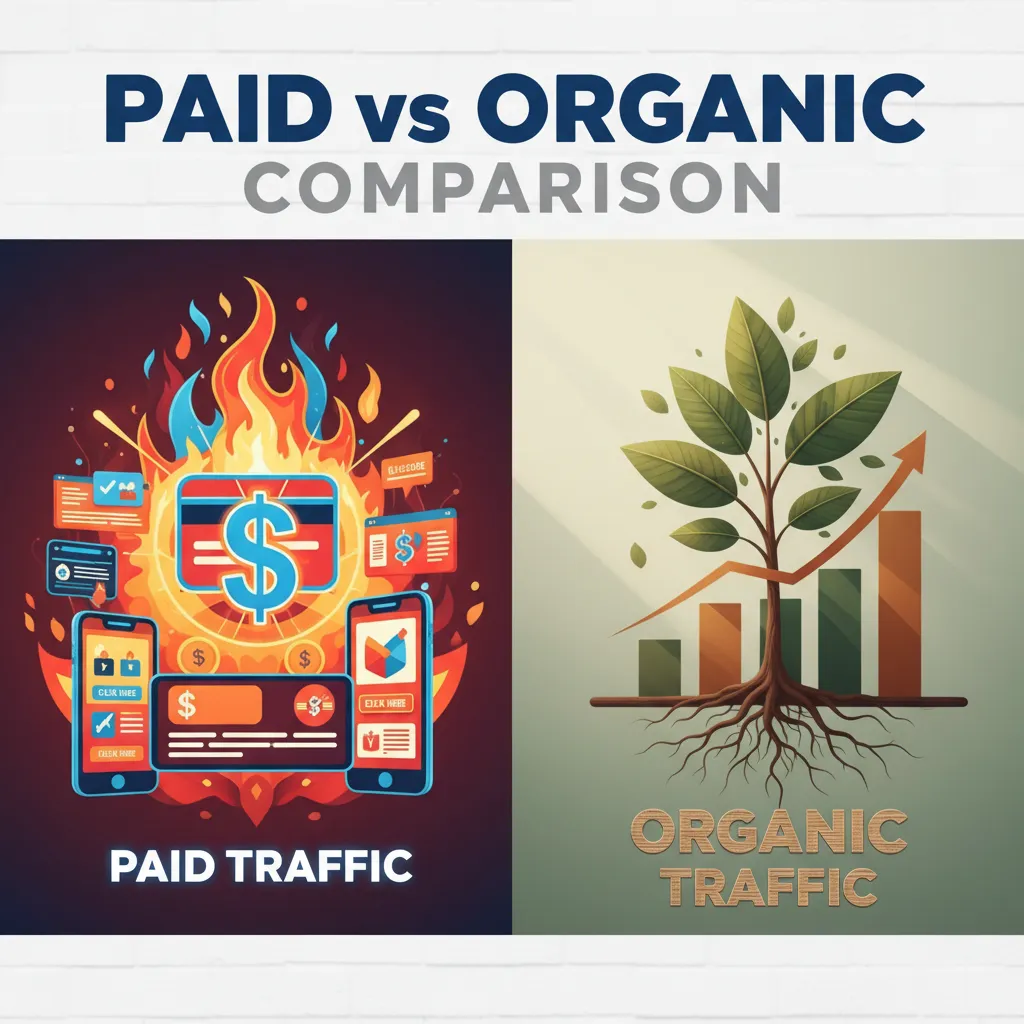
To balance your app marketing mobile strategy, you must understand the strengths and weaknesses of both paid and organic acquisition.
|
Feature |
Organic Acquisition (ASO) |
Paid Acquisition (UA) |
|---|---|---|
|
Speed of Results |
Slow. Takes months to build authority and rank. |
Fast. Immediate visibility upon launching campaigns. |
|
Cost |
Low direct costs, requires high time/effort investment. |
High direct costs depending on competition and CPI. |
|
Sustainability |
Highly sustainable. Traffic continues long-term. |
Stops immediately when the campaign budget runs out. |
|
User Intent |
High intent. Users are actively searching for solutions. |
Varies. Can be high (Search Ads) or low (Display Ads). |
|
Targeting Control |
Broad. Hard to control exactly who sees your listing. |
Precise. Granular control over demographics and interests. |
Retention and Engagement: Keeping Your Users Active
A high download count means nothing if your users abandon the application after one day. Retention is the true measure of app marketing mobile success.
Perfecting the Onboarding Experience
The first interaction a user has with your application dictates their long-term value. Keep onboarding brief and intuitive. Highlight the core benefits immediately and delay asking for extensive permissions (like location or push notifications) until the user truly understands the value they will receive in return.
Strategic Push Notifications
Push notifications are powerful tools for re-engaging users, but they must be used carefully. Segment your audience and send personalized messages based on their in-app behavior. For example, an ecommerce application might send a cart abandonment reminder, while a gaming application might notify a user that their energy has recharged. Always offer tangible value in your notifications.
In-App Messaging and Gamification
Use in-app messaging to guide users toward undiscovered features or to announce updates. Incorporating gamification elements, such as daily streaks, badges, and leaderboards, can significantly increase session length and frequency.
Expert Tips to Elevate Your App Marketing Mobile
To truly master the craft, consider these expert insights that go beyond the basics of app marketing mobile.
- Focus on Incrementality Testing: Do not just rely on standard attribution. Use incrementality testing to understand the true value of your paid campaigns and ensure they are driving installs that would not have happened organically.
- Implement Soft Paywalls Early: If you monetize through subscriptions, test soft paywalls during the onboarding process. Many users are willing to subscribe immediately if the value proposition is clear.
- Localize Your Content: Do not just translate your text; localize it. Consider cultural nuances, local search trends, and regional visual preferences when launching in new countries.
- Embrace AI Agents: Use AI tools for competitor analysis and keyword generation. AI can process vast amounts of data to identify trending topics and gaps in your ASO strategy faster than manual research.
- Optimize for Web-to-App: Drive traffic from a mobile website to your application. By writing comprehensive blog posts on your site, you capture organic Google search traffic and funnel those users directly to the app store. Look at HubSpot for great examples of content marketing driving software adoption.
Common Mistakes to Avoid
Even seasoned marketers make errors. Avoid these common pitfalls to protect your app marketing mobile strategy.
Ignoring Ratings and Reviews
Your app store rating is a massive conversion factor. Ignoring negative reviews damages your reputation. Always reply to reviews, both positive and negative. When addressing complaints, be professional and offer a solution. Users often update their negative reviews to positive ones if they receive excellent customer service. Consider reading guidelines from Apple Developer on how to properly handle customer feedback.
Treating ASO as a One-Time Task
App Store Optimization is an ongoing process. Algorithms change, competitors update their listings, and seasonal trends shift search behavior. You must continuously monitor your keyword rankings and iterate on your visual assets through A/B testing to maintain your competitive edge in app marketing mobile.
Overcomplicating the User Interface
If a user cannot figure out how to use your application within the first few seconds, they will uninstall it. Keep the design clean, intuitive, and focused on the core functionality. Complex navigation menus and cluttered screens are the enemies of retention.
Failing to Track the Right Metrics
Tracking downloads is not enough. To evaluate your app marketing mobile efforts, you need to track deeper funnel metrics. Monitor your Cost Per Install (CPI), Customer Acquisition Cost (CAC), Lifetime Value (LTV), Day 1/Day 7/Day 30 Retention Rates, and Return on Ad Spend (ROAS). If your CAC exceeds your LTV, your business model is unsustainable. Link up your data using platforms like mobile marketing analytics suites to get a clear picture of your user journeys.
Advanced Monetization Tactics
Effective app marketing mobile is closely tied to your monetization strategy. You need a model that generates revenue without alienating your user base.
Subscription Models
Subscriptions provide predictable, recurring revenue. To maximize subscription rates, offer tiered plans and clearly outline the premium features. Provide a free trial to let users experience the full value before committing financially.
In-App Purchases (IAP)
If your application relies on IAPs, ensure they enhance the user experience rather than act as mandatory paywalls for core functionality. In gaming, cosmetic items and time-savers are highly effective IAPs that respect the player’s time and experience.
Ad Monetization
If you offer a free application supported by ads, balance revenue generation with user experience. Intrusive pop-ups and unskippable videos can cause churn. Opt for rewarded video ads, where users voluntarily watch an ad in exchange for premium content or in-app currency. This creates a win-win scenario for both you and the user.
Building a Holistic Mobile Marketing Ecosystem
App marketing mobile is not just about isolated campaigns; it is about creating a cohesive ecosystem.
Ensure your user acquisition strategies seamlessly align with your app store optimization efforts. The keywords you target in your Apple Ads should mirror the keywords in your organic metadata. Furthermore, your external brand presence, including your social media profiles and website, must reflect the core messaging of your app store listing. Consistency builds trust, and trust drives installations.
By deeply integrating analytics, creative testing, and user feedback loops, you create a self-sustaining growth engine. Continuously interview your users, run surveys, and analyze behavioral data to stay ahead of market trends.
Conclusion
Mastering app marketing mobile requires a strategic blend of ASO, paid user acquisition, and relentless focus on user retention. By consistently analyzing data, optimizing your visual assets, and avoiding common pitfalls, you can dominate the app stores. Start implementing these app marketing mobile strategies today to drive massive installations and secure long-term success. Ready to grow? Audit your app store listing now!
FAQs
1. What is app marketing mobile?
App marketing mobile refers to the comprehensive process of engaging users from the moment they first hear about your application to when they become loyal, regular users. It encompasses pre-launch brand building, App Store Optimization (ASO), paid user acquisition, and post-download retention strategies to maximize installations and revenue.
2. Why is App Store Optimization (ASO) important?
ASO is critical because it acts as the SEO of the app stores. By optimizing your title, keywords, and visuals, you rank higher in search results, which drastically increases your organic visibility. Higher visibility leads to more free, high-intent downloads, lowering your overall customer acquisition costs.
3. How do I choose the right keywords for my application?
To choose the right keywords, use dedicated ASO tools to research terms relevant to your niche. Look for keywords with high search volume but manageable competition. Focus on long-tail keywords that accurately describe your specific features, and continuously test and update them based on performance data.
4. What is the difference between ASO and paid user acquisition?
ASO focuses on organic growth by optimizing your store listing to rank higher in natural search results, which takes time but provides sustainable traffic. Paid user acquisition involves spending money on platforms like Apple Ads or social media to immediately buy targeted traffic and drive instant installations.
5. How can I improve my app’s retention rate?
Improving retention starts with a seamless onboarding experience that quickly demonstrates value. Implement strategic, personalized push notifications, offer time-based rewards, utilize in-app messaging, and continuously update the software with new features and bug fixes to keep users engaged over time.
6. Do app reviews impact my store ranking?
Yes, ratings and reviews significantly impact your store ranking and overall conversion rate. Algorithms favor applications with high ratings and frequent positive reviews. Furthermore, potential users rely heavily on social proof; a higher rating builds trust and directly increases the likelihood of a download.
7. What are Custom Store Listings (CSLs)?
Custom Store Listings allow you to create alternative versions of your app store page tailored to specific audiences, regions, or promotional campaigns. By customizing the text and visuals for different demographics, you provide a more relevant experience, which typically results in higher conversion rates.
8. How much should I spend on paid user acquisition?
Your paid UA budget should be dictated by your Customer Acquisition Cost (CAC) and the Lifetime Value (LTV) of a user. As long as your LTV is significantly higher than your CAC, you can profitably scale your spending. Start with small, targeted test budgets to establish baselines before scaling up.
9. Why do users uninstall apps quickly?
Users typically uninstall software quickly if the onboarding process is confusing, the interface is cluttered, it crashes frequently, or it demands excessive permissions immediately. Misleading advertising that promises features the application does not deliver will also lead to immediate uninstalls.
10. How do I measure the success of my app marketing mobile campaigns?
Measure success by tracking a combination of top-of-funnel and bottom-of-funnel metrics. Look at organic rankings, Cost Per Install (CPI), conversion rates from page views to downloads, Day 1 and Day 30 retention rates, Return on Ad Spend (ROAS), and overall user Lifetime Value (LTV).