Augmented reality creates immersive experiences that drive user engagement. Utilizing AR for app marketing gives brands a massive competitive advantage by blending digital and physical realities seamlessly.
In today’s digital landscape, AR for app marketing has emerged as a revolutionary force that transforms passive browsing into immersive brand experiences. With smartphones becoming the gateway to augmented reality (AR), developers and marketers alike are seizing the opportunity to weave virtual elements into real environments. The boundaries between physical and digital continue to blur, allowing companies to showcase products in novel ways, spark genuine engagement, and foster lasting loyalty. As consumer expectations evolve, the demand for interactive, memorable encounters grows—making AR for app marketing not just an optional add-on, but a strategic imperative.
From dynamic AR previews in app stores to location-based rewards activated through push notifications, AR for app marketing can drive acquisition, engagement, and retention more effectively than traditional tactics. Early adopters have already reported impressive uplifts in session durations and social shares, underscoring the capability of augmented environments to capture attention and retain interest. Backed by research from institutions like NIST and case studies led by university labs, including Harvard University, AR strategies are validated as powerful growth engines in today’s app ecosystem.
In this comprehensive guide, we explore how to harness AR for app marketing effectively. You’ll learn how to craft acquisition strategies that slash cost per install, design retention programs that foster habitual use, integrate AR across every marketing touchpoint, measure campaign success with precision, and choose the right tools to bring your vision to life. Whether you’re launching a shopping app, a game, or a productivity tool, this roadmap will help you embed immersive AR experiences that stand out in crowded marketplaces and deliver measurable ROI.
Crafting AR-Driven User Acquisition Strategies
Acquiring new users is often the most resource-intensive phase of an app’s lifecycle. By leveraging AR for app marketing, you can cut through noise, generate organic buzz, and reduce dependency on paid ads. One of the first steps is to replace static screenshots in your app store listing with short AR demo trailers. A 5–10 second clip that shows virtual furniture dropping seamlessly into a living room or makeup layering naturally onto a face not only captures attention but invites users to tap and “Try in AR.” This call to action encourages hands-on exploration before download, increasing the likelihood of installation.
Social media platforms have also embraced AR ads, providing a powerful channel for discovery. On Instagram, Snapchat, and TikTok, interactive filters and mini-games can be built using AR development kits. These shareable assets spark peer-to-peer referrals and accelerate word-of-mouth. Studies show that AR social ads can reduce cost per install by up to 30%, thanks to the high engagement they generate. When crafting your AR for app marketing campaigns, focus on playful experiences—try-ons, face filters, or simple AR puzzles—that reward users with exclusive in-app content upon download.
Another effective tactic is to integrate referral programs with AR incentives. Offer users an exclusive AR collectible or unlockable game mode when they invite friends to join. For instance, after referring three new users, participants could gain access to a limited-edition AR sticker pack or a 3D avatar customization suite. This dual reward structure motivates both the referrer and the new user, creating a viral loop that fuels organic growth. By weaving AR features into each acquisition channel—app store previews, social media filters, and referrals—you build a consistent narrative around interactive exploration that resonates with today’s tech-savvy audiences.
Amplifying Engagement and Retention with AR

Once a user installs your app, the next challenge is to ensure they return regularly. AR for app marketing can transform one-time downloads into daily habits. The onboarding process offers a prime opportunity to showcase immersive functionality. Instead of relying on static tutorials or text pop-ups, deploy AR overlays that highlight key features in the user’s real environment. For example, an AR pointer could float above a button and demonstrate its effect when tapped. This contextualized, hands-on approach can reduce early churn by up to 20%, making users feel confident in navigating the app from the first session.
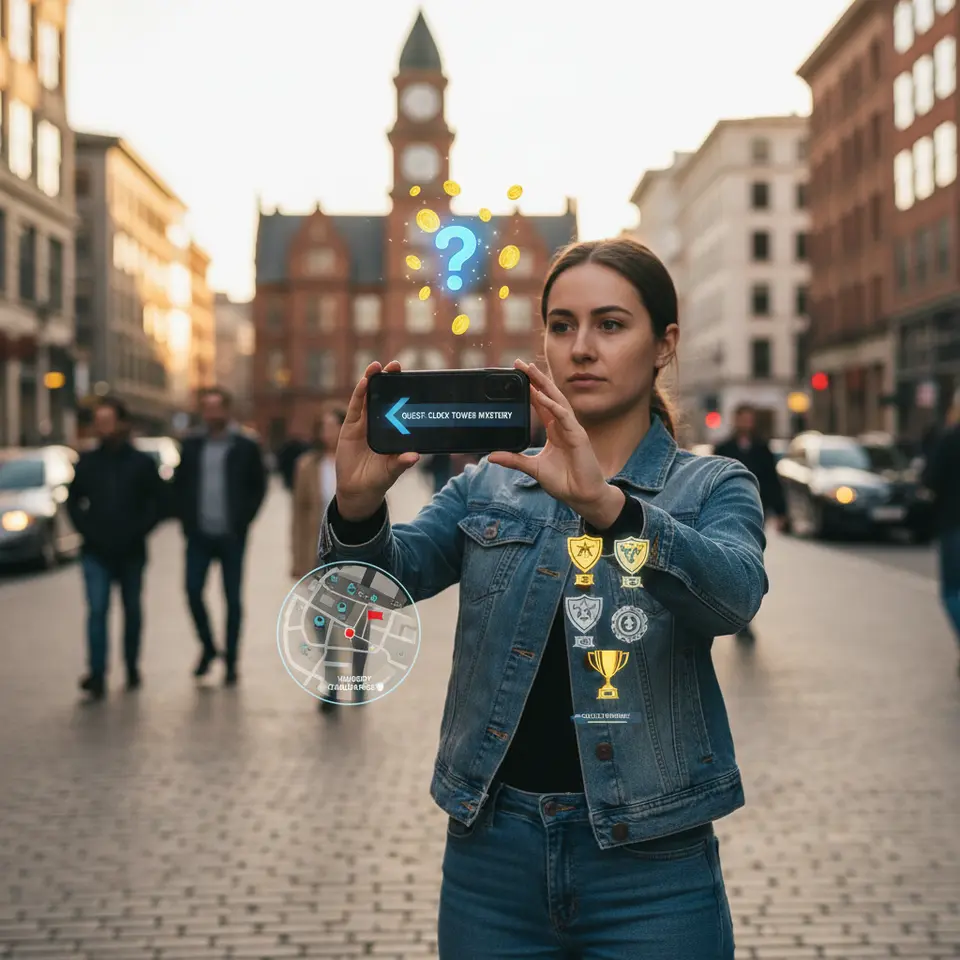
Gamification further enhances engagement. Implement AR-based quests that require users to explore their surroundings. Hide virtual objects at landmarks, encourage scanning QR markers for surprise rewards, or deploy geofenced challenges that trigger only near specific locations. Leaderboards and social sharing options amplify the excitement, creating friendly competition and fostering community around your app. By tying these AR experiences to real-world spaces, you not only boost retention but also drive local brand awareness.
Loyalty programs can also benefit from AR for app marketing. Reward consistent engagement with collectible digital badges that appear in a user’s environment—perhaps a floating trophy or a custom avatar hat. These personalized assets can be shared on social channels, providing social proof and free publicity. Over time, a curated gallery of unlocked AR rewards inspires users to continue interacting, building emotional investment in your app, and increasing lifetime value.
Integrating AR Across Marketing Channels

Isolated AR features have limited impact; true success comes from weaving augmented reality throughout your entire marketing ecosystem. Email campaigns can include a “Try in AR” button that launches a WebAR demo directly from the inbox, inviting recipients to engage without installing the app first. This frictionless introduction sets the stage for deeper in-app experiences once the user downloads.
Push notifications offer another integration point. Use location-based triggers to deliver surprise AR interactions—”Open the app when you’re near your favorite coffee shop for a limited-time AR coupon!”—and drive foot traffic to partner locations. Such real-world incentives blend digital convenience with tangible rewards, reinforcing the value of both the AR feature and the app itself.
Partnerships with brick-and-mortar retailers or event organizers can expand your reach. Co-branded AR filters launched at in-store events or pop-up activations generate social content that highlights your app and your partners. When attendees share branded AR moments, they extend your campaign organically, creating a multiplier effect as their networks discover your app through authentic endorsements.
To tie all channels together, ensure consistent messaging and visual identity in every AR asset. Whether it’s an email link, a push notification, or a social media filter, users should recognize your brand’s style, tone, and interactive promise. A unified approach to AR for app marketing maximizes recall and delivers cohesive experiences that drive deeper engagement.
Measuring AR Campaign Success
As with any marketing initiative, data is essential to validate ROI and guide optimization. When deploying AR for app marketing, focus on these key performance indicators:
- AR Engagement Rate: The proportion of users who launch AR experiences compared to total installs. A healthy benchmark is 30–40% initially, rising over time as awareness grows.
- Session Duration in AR Mode: Compare average time spent interacting with AR features versus standard app sessions. Extended AR sessions often indicate higher emotional investment.
- AR-Driven Installs: Track installs directly attributed to AR previews, filters, or mini-games. Use unique deep links and campaign IDs to isolate this traffic.
- Retention Lift: Monitor Day 7 and Day 30 retention rates among users exposed to AR features versus control groups.
- Social Share Rate: The percentage of AR interactions shared to external platforms—higher share rates amplify organic reach and serve as a proxy for user enthusiasm.
Platforms like Mixpanel, Firebase Analytics, and custom dashboards can capture these metrics with granular detail. For instance, you might discover that a particular AR filter drives high engagement but low retention—prompting you to iterate on its core interaction or reward system. Regularly analyze these insights to refine AR for app marketing tactics, allocate budget toward the most impactful elements, and scale successful experiments.
Top AR Tools and Platforms
Selecting the right technology stack accelerates development, enhances performance, and reduces long-term costs. Here are the leading solutions for AR for app marketing:
- ARKit (iOS): Apple’s powerful SDK offers world tracking, face detection, and environmental understanding. Its seamless integration with Swift makes it a top choice for iPhone-only apps.
- ARCore (Android): Google’s counterpart delivers motion tracking, light estimation, and persistent anchors. Developers can build robust AR experiences for a wide range of Android devices.
- Unity & Unreal Engine: These cross-platform game engines support visual scripting, advanced rendering, and easy deployment. They enable complex AR scenes, realistic lighting, and physics-based interactions.
- WebAR Platforms: Providers like 8th Wall and Zappar let you deploy AR directly in browsers without downloads. Ideal for email campaigns or social media links, WebAR lowers barriers to entry for first-time users.
- Snap Lens Studio & Spark AR: Build custom filters for Snapchat and Instagram with intuitive GUIs. These tools are indispensable for social-first AR for app marketing strategies.
When choosing tools, consider your target audience, budget, and technical resources. For a visually rich retail app, Unity combined with ARKit and ARCore may deliver the highest quality results. If rapid testing and viral potential are priorities, WebAR and social AR platforms offer quick turnaround and broad distribution. In all cases, early prototyping and user feedback loops are crucial to ensure performance and usability across devices.
FAQ
What exactly is AR for app marketing?
It is the strategic integration of Augmented Reality into your promotional funnel. Unlike traditional ads, AR for app marketing uses a device’s camera to overlay digital elements—like 3D products or interactive games—onto the physical world, creating a high-engagement “bridge” between the user and the app.
How does AR for app marketing lower User Acquisition costs?
By offering “try-before-you-download” experiences via social media filters or WebAR, you qualify leads better. Users who interact with an AR demo have higher intent, which often results in a 30% lower cost per install and higher conversion rates compared to static image ads.
Can AR really improve app retention rates?
Yes. Implementing AR for app marketing within the onboarding process—such as using AR overlays to explain features—helps users find value faster. Interactive gamification and location-based AR rewards also provide consistent reasons for users to return to the app daily.
Do users need to download an app to experience AR marketing?
Not necessarily. Through WebAR, you can launch immersive experiences directly from a mobile browser via email links, QR codes, or social media. This is a powerful AR for app marketing tactic to drive interest before the user commits to a full app installation.
Which industries benefit most from AR for app marketing?
While gaming is a natural fit, industries like Retail (virtual furniture placement), Beauty (makeup try-ons), Education (interactive 3D models), and Real Estate (virtual tours) see the most significant ROI by solving real consumer “visualization” problems.
How do geofenced AR rewards work?
This involves triggering AR content when a user is in a specific physical location. For a robust AR for app marketing strategy, you can send a push notification when a user is near a partner store, unlocking a virtual coupon or an exclusive 3D collectible only available at that spot.
What are the key metrics to track for AR success?
To evaluate your AR for app marketing performance, monitor the AR Engagement Rate (how many users launch the camera), average Session Duration in AR mode, and the Social Share Rate (how often users post their AR moments).
Is AR for app marketing difficult to integrate with existing channels?
No. It can be woven into your current ecosystem by adding “View in AR” buttons to email newsletters, using AR triggers in push notifications, or launching branded filters on platforms like Instagram and Snapchat.
What tools are recommended for AR development?
For high-performance native apps, ARKit (iOS) and ARCore (Android) are essential. For cross-platform marketing experiences, Unity is the preferred engine, while 8th Wall is the leader for browser-based WebAR campaigns.
Does AR for app marketing work for B2B apps?
Absolutely. B2B apps can use AR to demonstrate complex machinery in 3D, visualize data in a physical boardroom setting, or provide interactive training modules, positioning the brand as a tech-forward industry leader.
Conclusion
In today’s competitive app marketplace, adopting AR for app marketing is no longer optional—it’s a strategic necessity. By embedding interactive, real-world experiences into acquisition, engagement, and retention efforts, you create memorable touchpoints that resonate with modern audiences. From dynamic store previews to location-based rewards and gamified quests, AR drives longer sessions, higher recall, and deeper loyalty. Backed by data from leading institutions and proven by brands across industries, AR for app marketing offers a measurable uplift in installs and sustained user value.
As you move forward, remember to integrate AR across every channel, track key metrics diligently, and choose platforms that align with your goals. Seize the opportunity to stand out with immersive experiences that delight users and propel growth. Embrace augmented reality today, and position your app at the forefront of mobile innovation.