Top Mobile App Marketing Trends are reshaping how apps acquire, engage, and retain users by combining data-driven storytelling, personalization, creator influence, and continuous optimization.
The digital app marketplace is crowded, fast-moving, and unforgiving. Users have endless choices, attention spans are short, and platform algorithms reward relevance rather than noise. That is why marketers need a clear framework that connects discovery, conversion, retention, and monetization. Top Mobile App Marketing Trends are not isolated tactics; they are the operating system of modern growth. When you understand how users search, browse, compare, install, and return, you can build campaigns that feel helpful instead of intrusive. The best-performing teams do not simply buy clicks. They design trust. They shape intent. They reduce friction at every step. In this guide, you will learn how to use Top Mobile App Marketing Trends to attract better users, improve lifetime value, and make your app more resilient in a volatile market.
Why trends matter in mobile app growth
Growth in apps is no longer driven by a single channel or one lucky campaign. It is built through consistent experimentation, disciplined messaging, and an understanding of changing user behavior. Top Mobile App Marketing Trends matter because app stores, ad networks, and user expectations keep evolving. What worked last year may be too expensive, too generic, or too slow today.
The best marketers think in systems. They ask where demand is created, where it is captured, and where it is lost. They notice the small signals: how fast people abandon onboarding, which creatives earn saves or shares, which app store screenshots convert, and which push messages feel valuable. Top Mobile App Marketing Trends help you interpret those signals faster. They also help you avoid wasted spend by choosing tactics that match your stage of growth. A new app needs visibility and trust. A mature app needs retention, referral, and monetization efficiency. The same campaign cannot serve both equally well.
Modern growth teams also blend creative and analytical work. The creative side shapes the promise. The analytical side proves whether that promise converts. Top Mobile App Marketing Trends bridge those two worlds by demanding audience insight, content quality, and measurement discipline in the same workflow.
The psychology behind app installs
People do not install apps because of features alone. They install because a promise feels relevant, immediate, and safe. That promise might be convenience, entertainment, savings, status, control, or belonging. Top Mobile App Marketing Trends increasingly reflect this psychological reality. The strongest campaigns do not announce every feature at once. They answer the user’s silent question: “Why should I care right now?”
Trust is one of the strongest conversion drivers. App users worry about privacy, storage space, subscription traps, and wasted time. Marketing should reduce those fears early. Clear positioning, strong app store visuals, real testimonials, and transparent pricing all improve conversion. Top Mobile App Marketing Trends also show that emotional reassurance matters as much as rational persuasion. A user who feels the app is simple and safe is more likely to install than one who only sees technical claims.
Another important factor is identity. Users often choose apps that reflect who they want to be. Fitness apps appeal to discipline. Finance apps appeal to control. Design apps appeal to creativity. Gaming apps appeal to fun or mastery. When campaigns speak to identity, they become more memorable. That is one reason Top Mobile App Marketing Trends emphasize lifestyle storytelling instead of feature dumping.
A practical framework for mobile app marketing

A smart strategy usually follows four stages: attract, activate, retain, and expand. Top Mobile App Marketing Trends support each stage in a different way.
| Stage | Main goal | Best marketing focus | Common risk |
|---|---|---|---|
| Attract | Reach qualified users | Creators, search, short-form video, ASO | Low-quality installs |
| Activate | Deliver first value fast | Onboarding, onboarding copy, paywall timing | Drop-off before aha moment |
| Retain | Keep users engaged | Personalization, push, email, in-app content | Notification fatigue |
| Expand | Increase LTV | Referrals, upsells, community, subscriptions | Over-monetization |
This framework makes Top Mobile App Marketing Trends more useful because it prevents random execution. Instead of chasing every channel, you can match the right message to the right moment. The result is better efficiency and less wasted effort.
Trend 1: Privacy-first targeting is changing acquisition
User trust has become a performance metric. As data restrictions, consent rules, and platform changes reshape attribution, marketers need cleaner first-party data strategies. Top Mobile App Marketing Trends show that privacy-first acquisition is no longer optional. It influences everything from ad targeting to analytics design.
The most effective teams collect meaningful data directly from users after the install, not before. They use in-app events, preference centers, quizzes, onboarding flows, and opt-in prompts to understand intent. This improves personalization while respecting boundaries. Top Mobile App Marketing Trends also highlight the value of honest messaging. When users know what data is collected and why, they are more likely to stay engaged.
Privacy-first marketing also requires smarter creative testing. When targeting becomes less precise, your creative must do more work. The message, image, and offer must speak to the right audience without relying on overly narrow targeting. In practice, Top Mobile App Marketing Trends encourage broader audience discovery supported by stronger creative variations.
Trend 2: Short-form video is becoming the default discovery format
Short-form video has transformed how people discover products, habits, and entertainment. App marketing now follows that same behavior. Top Mobile App Marketing Trends make it clear that video is not just a branding layer; it is often the first sales page. A few seconds of motion can communicate value faster than a paragraph of text.
The most effective videos show the app in action, not just polished logos. They focus on the user outcome: faster workouts, cleaner designs, smarter budgets, better organization, or more fun. The hook matters enormously. Top Mobile App Marketing Trends reward videos that begin with a problem, a surprise, or a benefit within the first second or two.
Creators also play a major role. UGC-style videos feel less like ads and more like recommendations from a real person. That lowers resistance and boosts trust. Many app teams now create dozens of variations based on the same idea, then let the best-performing version scale. Top Mobile App Marketing Trends are heavily tied to iteration speed, so creative testing cadence matters more than creative perfection.
Trend 3: App Store Optimization is becoming more visual and more strategic
App Store Optimization is no longer about stuffing keywords into a title. It is a full-funnel conversion discipline. Top Mobile App Marketing Trends show that store pages now work like mini landing pages. Screenshots, previews, ratings, reviews, and category positioning all influence install rates.
To improve conversion, start with clarity. The app title, subtitle, and first screenshot should communicate the main value instantly. Avoid vague claims. Instead of saying the app is “powerful,” show what power looks like. Top Mobile App Marketing Trends reveal that users convert more readily when they can imagine the app solving a real task in seconds.
Localization is also critical. Users in different markets respond to different words, colors, and use cases. That is why store pages should be adapted, not merely translated. Top Mobile App Marketing Trends favor localized storytelling because it respects culture and improves relevance. Even small changes, like region-specific screenshots or pricing cues, can move conversion meaningfully.
Reviews remain one of the most persuasive assets. They provide social proof and reduce hesitation. Encourage satisfied users to review at the right moment, usually after a successful action rather than immediately after install. Top Mobile App Marketing Trends increasingly connect app store management with product experience, because the best review strategy starts inside the app.
Trend 4: Personalization is moving beyond first names
Personalization works when it feels helpful, not creepy. The new standard is context-aware relevance. Top Mobile App Marketing Trends show that users expect experiences shaped by their behavior, preferences, location, timing, and progress.
That can mean different onboarding paths for different user intents, different offers for new and returning users, or different content blocks based on browsing history. It can also mean smarter lifecycle messages. A user who has not completed setup needs a reminder, while a power user may need an advanced tip or premium upgrade. Top Mobile App Marketing Trends reward segmented communication that respects where a user is in the journey.
The key is to connect personalization with value. A message should solve a problem, not just prove that you have data. When done well, personalization increases retention because the app feels easier to use. That is why Top Mobile App Marketing Trends increasingly focus on dynamic experiences rather than broad one-size-fits-all campaigns.
Trend 5: Influencer and creator partnerships are becoming performance channels
Creator marketing is no longer limited to brand awareness. It now drives installs, trials, and subscriptions. Top Mobile App Marketing Trends reflect a major shift: audiences trust people more than polished corporate claims. A credible creator can explain an app’s value in a way that feels natural, specific, and persuasive.
The best partnerships are not always with the biggest names. Micro-creators often deliver stronger engagement because their audiences are more focused. They can demonstrate the app in realistic scenarios and answer objections more believably. Top Mobile App Marketing Trends show that creator fit matters more than creator fame.
A good creator campaign should feel native to the platform. The video should match the way people already consume content there. It should show the app solving a specific pain point, and it should include a clear next step. Top Mobile App Marketing Trends also suggest building reusable creative systems, so multiple creators can produce content within the same strategic theme without sounding identical.
Trend 6: Lifecycle marketing is now a revenue engine
Many app teams spend heavily to acquire users, then fail to keep them active. That is a costly mistake. Top Mobile App Marketing Trends emphasize lifecycle marketing because retention is where profitable growth happens. If users disappear after the first session, acquisition becomes a leaky bucket.
Lifecycle marketing begins with onboarding. New users need to understand the value fast. They need a quick win, not a long tutorial. After onboarding, communication should encourage habits, not just remind people that the app exists. Top Mobile App Marketing Trends show that effective lifecycle programs use email, push, SMS, and in-app messaging in a coordinated sequence.
The smartest teams use behavior as the trigger. For example, a user who viewed a feature but did not finish setup may receive a reminder with a benefit-focused message. A user who completed a milestone may receive congratulations and a suggestion for the next step. Top Mobile App Marketing Trends reward this kind of thoughtful sequencing because it feels more human than generic blasts.
Trend 7: Community and social proof are becoming conversion accelerators
People feel safer choosing an app when they see evidence that others value it. That evidence can come from ratings, testimonials, case studies, community posts, creator recommendations, or social sharing. Top Mobile App Marketing Trends increasingly rely on community because social proof reduces uncertainty.
Community is especially powerful for apps tied to habits, learning, wellness, finance, or productivity. When users see others making progress, they feel motivated to stay. They also start to identify with the app’s ecosystem. Top Mobile App Marketing Trends show that community does not always require a large forum. Sometimes it is simply a recurring challenge, a user spotlight, or a shared milestone that gives the product a human face.
The psychological effect is strong: people trust what they can observe being trusted by others. That makes social proof both a branding asset and a conversion asset. Top Mobile App Marketing Trends are moving toward proof-rich experiences that reduce the burden on the marketer to “sell” every time.
Trend 8: AI is accelerating creative and campaign optimization
Artificial intelligence is changing how teams create, test, and refine campaigns. Top Mobile App Marketing Trends now include AI-assisted ideation, audience analysis, copy variation, and performance forecasting. The benefit is not that AI replaces marketers. The benefit is that it speeds up the repetitive work so humans can focus on judgment and strategy.
AI can help generate headline options, visual concepts, segmentation ideas, and message variants. It can also support pattern recognition across large data sets. Top Mobile App Marketing Trends make AI especially useful in creative testing because app marketers often need many variations before finding a winner.
Still, AI is most effective when guided by clear brand rules. Without strategy, AI can create content that sounds generic or off-brand. The best teams use AI to scale a strong idea, not to invent one from nothing. Top Mobile App Marketing Trends suggest that AI works best as an amplifier of human insight.
Trend 9: Retention design is being treated as a marketing discipline
Marketing does not end after install. In many apps, the real battle begins after the first use. Top Mobile App Marketing Trends increasingly treat retention design as a shared responsibility between product, growth, and marketing teams. This matters because the cost of acquiring users rises when the app does not keep them.
Retention design includes habit loops, reminders, progress indicators, streaks, saved preferences, and intelligent prompts. It also includes removing friction from recurring actions. Top Mobile App Marketing Trends favor apps that make the next session feel obvious and rewarding. The faster a user experiences ongoing value, the less likely they are to churn.
This is where messaging and product experience meet. A thoughtful notification can bring a user back, but only if the app delivers a satisfying outcome after the click. Top Mobile App Marketing Trends reward teams that coordinate message timing with in-app readiness.
Trend 10: Monetization messaging is becoming more transparent
Users are more selective than ever about subscriptions and in-app purchases. They want clarity before commitment. Top Mobile App Marketing Trends show that monetization works best when it is framed as value, not pressure. The more transparent the offer, the more trustworthy the brand.
Free trials, freemium upgrades, annual plans, feature bundling, and tiered access all need clear explanation. Users should understand what they get, what they save, and what changes after purchase. Top Mobile App Marketing Trends also show that timed offers work best when they follow a meaningful success moment, not when they interrupt the user too early.
Transparency improves not only conversion but also satisfaction. Users who feel informed are less likely to regret the purchase. That leads to fewer refunds, fewer complaints, and better reviews. Top Mobile App Marketing Trends therefore connect pricing strategy with user experience.
Premium Vs Free Themes: why design choices affect app perception
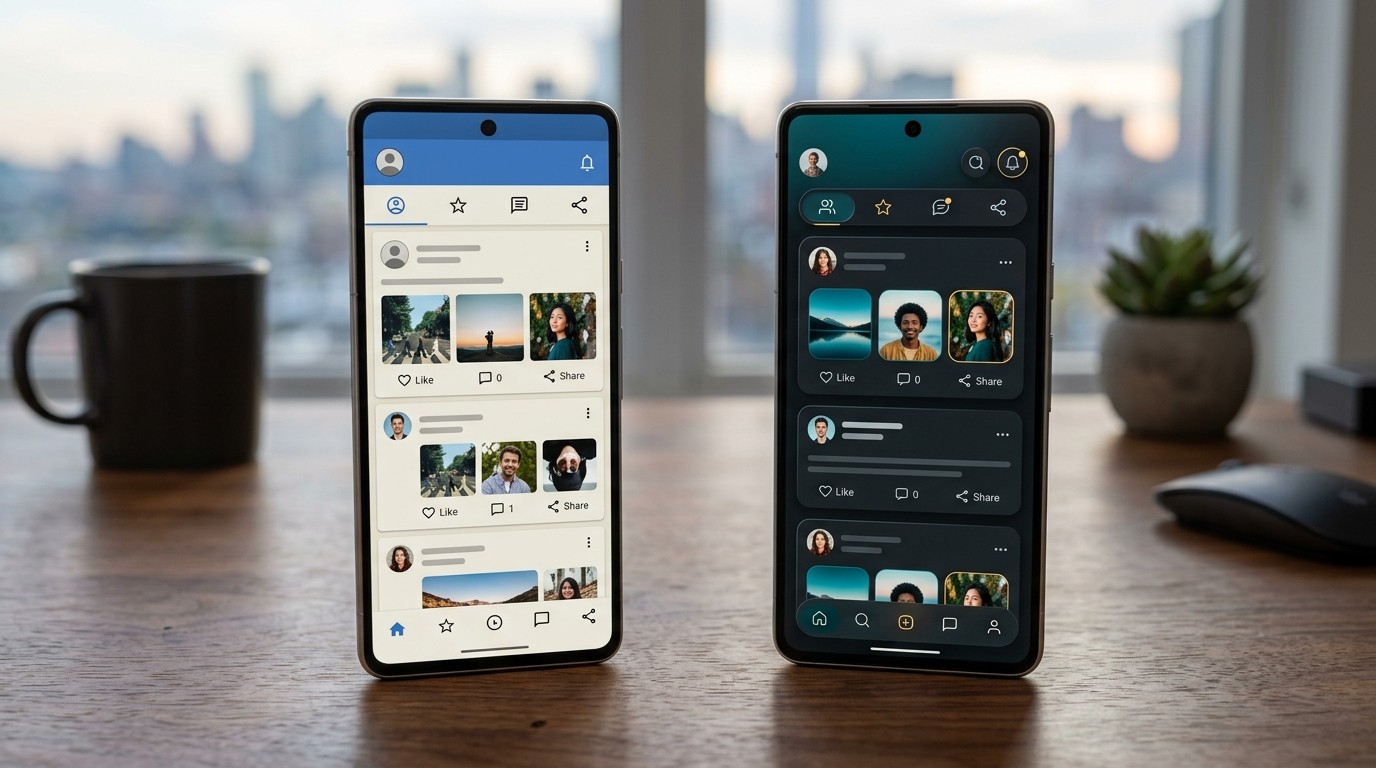
The way a landing page, demo page, or companion website looks can shape expectations before a user even downloads the app. Premium Vs Free Themes often create different trust signals. Premium styles usually suggest polish, stability, and attention to detail, while free styles can sometimes feel generic or overly common. For app marketing, design quality matters because it influences first impressions and credibility.
When marketers compare Premium Vs Free Themes, they are really comparing perception, speed, and brand alignment. A strong visual system can support app store traffic, creator campaigns, and retargeting pages. It can also help users feel that the app itself is worth trying. That visual consistency is one of the quieter drivers behind Top Mobile App Marketing Trends because trust is often built before the install ever happens.
WordPress GPL Themes and their role in app marketing ecosystems
Many app businesses use content marketing websites to educate users, capture leads, and support organic discovery. WordPress GPL Themes can be useful in that ecosystem because they offer flexibility for building landing pages, blogs, and promotional hubs. When a company publishes educational content, comparison pages, and feature guides, it can attract users who are actively researching solutions.
Used well, WordPress GPL Themes can support fast testing of campaign pages and blog structures. That matters because app marketing teams often need to launch new content quickly. A flexible site helps you respond to seasonality, product changes, or audience questions without slowing down growth. This is another reason Top Mobile App Marketing Trends now connect product marketing with content infrastructure. The app itself may be the product, but the content around it often helps people discover and trust it.
Mobile App Marketing in a modern growth stack
Mobile App Marketing has evolved into a multi-layered discipline that combines paid acquisition, organic discovery, lifecycle communication, and product-led growth. It is no longer enough to run one ad campaign and hope the install converts. The modern stack requires coordination across creative, analytics, CRM, ASO, community, and product.
In this environment, Mobile App Marketing depends on timing and relevance. A search ad may capture high intent, while a creator video may spark curiosity. An onboarding flow may convert that curiosity into habit, and a well-timed push notification may bring the user back later. Top Mobile App Marketing Trends exist because all these pieces now work together. The strongest teams do not think in silos. They think in journeys.
How to choose the right trend for your app
Not every trend is right for every app. A fintech app may benefit more from trust-building and lifecycle personalization. A game may need creator content and short-form video. A productivity app may need strong ASO and habit design. Top Mobile App Marketing Trends become most effective when matched to product category, audience maturity, and budget.
Start by diagnosing the biggest bottleneck. Are people not discovering the app? Are they installing but not activating? Are they activating but not returning? Once the bottleneck is clear, choose one or two trends that solve that exact problem. Top Mobile App Marketing Trends are most powerful when they are used surgically.
It also helps to measure outcomes by stage. Acquisition campaigns should be judged not just by installs but by quality. Retention campaigns should be judged by repeat actions and churn reduction. Monetization campaigns should be judged by conversion and long-term value. Top Mobile App Marketing Trends support a full-funnel view, not a vanity-metric mindset.
Advanced Mobile App Marketing Techniques for scaling
Once the basics are working, growth requires more advanced Mobile App Marketing Techniques. This means testing creative angles at scale, building audience segments from behavioral data, and aligning media spend with predicted lifetime value. It also means using experimentation frameworks so decisions are based on evidence rather than instinct.
Advanced Mobile App Marketing Techniques often include multi-touch attribution analysis, cohort modeling, predictive retention scoring, dynamic onboarding, and re-engagement based on in-app milestones. These methods help teams spend smarter. They also help marketers communicate more precisely. Top Mobile App Marketing Trends increasingly favor this kind of sophistication because the market rewards relevance and speed.
The advanced stage is not about doing more of everything. It is about doing fewer things better. Teams that win usually have one strong message, one clear audience insight, and one reliable measurement loop. Top Mobile App Marketing Trends reward focus, not chaos.
Common mistakes that weaken app growth
The biggest mistake is treating every user the same. Another mistake is over-promising in ads and under-delivering in the product. A third mistake is failing to measure the post-install journey. Top Mobile App Marketing Trends reveal that successful brands avoid these errors by aligning promise, product, and proof.
Other common mistakes include weak creative testing, poor onboarding, ignoring reviews, and using too many notifications. Even a good campaign can fail if the app experience is confusing. Top Mobile App Marketing Trends remind marketers that growth is holistic. One weak link can pull down the entire chain.
Building a sustainable growth loop
A sustainable growth loop starts with attraction, but it does not end there. Users who love the app become repeat users, reviewers, sharers, and advocates. That creates compounding value. Top Mobile App Marketing Trends increasingly support loops rather than linear funnels because loops are more resilient.
A strong loop usually includes discovery, first value, habit formation, referral, and reactivation. Each stage strengthens the next. The app becomes easier to market because satisfied users help do the marketing. Top Mobile App Marketing Trends are powerful because they help transform isolated campaigns into repeatable systems.
A 90-day action plan
In the first 30 days, audit your app store presence, creative library, onboarding, and analytics. Identify the weakest point in the user journey. In the next 30 days, launch new creative tests, improve lifecycle messaging, and refine your value proposition. In the final 30 days, analyze cohorts, scale what works, and cut what does not. Top Mobile App Marketing Trends should be implemented in sequence, not all at once.
The goal is to create momentum. A small win in conversion can improve acquisition efficiency. A small win in retention can improve revenue. A small win in creative can lower cost per install. Top Mobile App Marketing Trends work best when they build on each other.
Measurement that keeps growth honest

A strong strategy needs honest measurement. Track the numbers that show whether the app is truly improving, not just appearing busy. Look at install-to-signup conversion, signup-to-first-value conversion, day 1, day 7, and day 30 retention, subscription start rate, refund rate, and revenue by cohort. These signals reveal where the journey breaks down. They also help you decide whether a creative idea, an onboarding change, or a pricing adjustment is actually working.
A useful habit is to compare paid and organic users separately. They often behave differently, and blending them can hide important patterns. Another useful habit is to review new-user cohorts after each major campaign change. Small improvements compound over time. The best teams treat measurement as a decision tool, not a reporting ritual. When the numbers are clear, the next action becomes easier to choose.
Budgeting for smarter scaling
Scaling does not mean spending more everywhere. It means spending where the return is strongest and pausing where the signal is weak. Start with a modest test budget, spread it across a few creative concepts, and let the data show which angle deserves more investment. Keep some budget reserved for experiments so you can test new channels without disrupting proven ones.
It also helps to separate exploration from scaling. Exploration finds the next opportunity. Scaling expands what already works. Many teams fail because they try to scale before the message is stable. Sustainable growth comes from patience, iteration, and good resource allocation. Once a campaign proves its value, increase spend carefully and watch whether performance stays consistent under pressure.
Clear goals, patient testing, and consistent optimization keep every campaign focused on long-term growth, not short-term vanity.
Conclusion
Top Mobile App Marketing Trends are not a passing buzzword; they are the practical response to how users discover, evaluate, and keep using apps in a crowded market. The brands that win are the ones that combine trust, relevance, and speed. They use video, creators, ASO, personalization, community, and retention design in a coordinated way. They also measure beyond installs and focus on value over vanity. When your strategy respects the user’s time and intent, growth becomes more predictable. Use the trends that match your bottleneck, keep testing, and let the product experience prove the promise. That is how sustainable mobile growth is built.
Frequently Asked Questions (FAQ)
1. What are Top Mobile App Marketing Trends?
Top Mobile App Marketing Trends are the most effective current strategies used to discover, acquire, convert, and retain app users across paid, organic, and lifecycle channels.
2. Why do Top Mobile App Marketing Trends matter?
They matter because app markets change quickly, and the same tactics do not work equally well forever. Staying aligned with Top Mobile App Marketing Trends helps brands remain competitive.
3. How often should I update my strategy?
Review your app marketing strategy monthly and refresh key creative, onboarding, and retention elements whenever data shows a drop in performance.
4. Which channel is best for app growth?
There is no single best channel for every app. The right channel depends on your audience, budget, and goal. Short-form video, ASO, paid search, and creator content all have value.
5. How can I improve app store conversions?
Improve clarity, use stronger screenshots, add social proof, localize store assets, and test different value propositions. App store pages should make the promise obvious within seconds.
6. Are creators useful for small apps?
Yes. Small apps often benefit from micro-creators because they can build trust affordably and show the app in a realistic, relatable way.
7. What is the biggest mistake in app marketing?
The biggest mistake is focusing only on installs and ignoring retention. Growth becomes expensive when users do not return.
8. How does personalization help app marketing?
Personalization improves relevance. When messages, offers, and in-app experiences match user behavior, people are more likely to engage and stay.
9. What metrics should I track?
Track installs, conversion rate, activation rate, retention, churn, revenue per user, and lifetime value. These metrics show whether marketing is actually producing durable growth.
10. Can one strategy work for all apps?
No. Top Mobile App Marketing Trends should be adapted to the app category, user intent, and stage of growth. A tailored approach always performs better than a generic one.