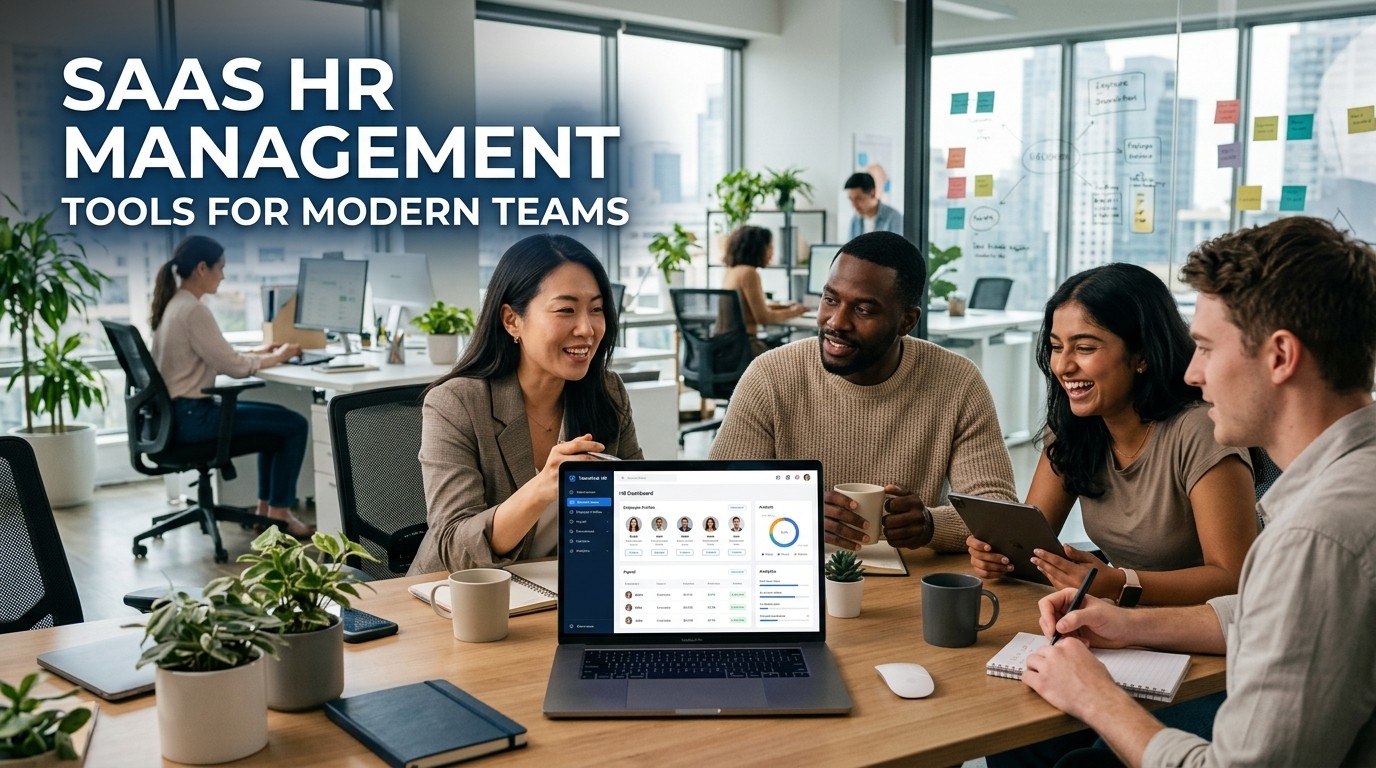
SaaS HR Management gives modern teams one place to handle hiring, onboarding, payroll, compliance, and employee experience with less manual work and more control.
SaaS HR Management has become one of the most practical upgrades for modern teams because people operations are now too complex for spreadsheets, email chains, and disconnected files. As companies grow, the HR function must support hiring, onboarding, records, policy control, payroll, and employee support without slowing everyone down. That is where SaaS HR Management stands out. It turns scattered processes into a connected system that is easier to manage, easier to scale, and easier for employees to trust.
SaaS HR Management also reflects how work has changed. Teams are more distributed, faster moving, and more dependent on clean data than ever before. HR leaders need accurate records. Managers need visibility. Employees need simple self-service. SaaS HR Management helps all three by bringing the full employee lifecycle into one environment instead of separating it across many tools.
The biggest value is not only efficiency. SaaS HR Management also improves the way a company feels from the inside. When onboarding is smooth, leave requests are clear, documents are easy to find, and payroll runs correctly, people notice. That small sense of order builds confidence in the organization. In modern business, that confidence matters.
Why Modern Teams Need SaaS HR Management
SaaS HR Management matters because the old way of managing people is too slow for the pace of work today. Employees change roles, teams expand, policies update, and managers need answers quickly. A cloud-based system keeps everything available in one place so people do not waste time searching through old folders or asking the same questions again and again.
SaaS HR Management also reduces the risk of mistakes. When employee records are entered once and shared across workflows, the chance of duplicate data or missing information drops. That matters for compensation, compliance, attendance, and reporting. A small error in HR can become a bigger problem if it touches payroll or legal records, so the structure of the system really counts.
The other reason teams move toward SaaS HR Management is scale. A company that is comfortable at twenty people may struggle at fifty if everything is still manual. The right platform grows with the business, which means HR can support expansion without rebuilding the process from scratch every few months.
What a Good HR Platform Should Actually Do
A useful system should not only store employee information. SaaS HR Management should support the practical moments that shape the employee journey. That includes recruiting, onboarding, document management, time tracking, payroll, benefits, compliance, reviews, and offboarding. If a platform only covers one or two of those areas, it leaves too many gaps behind.
SaaS HR Management should also be easy for employees to use. The goal is not to make HR software impressive on paper. The goal is to make it simple enough that staff can update their information, request time off, and access documents without needing extra help. That self-service layer saves time for both HR and employees.
A strong platform also has to be reliable. People trust payroll. People trust policy records. People trust benefit details. If the system is confusing or inconsistent, confidence drops quickly. SaaS HR Management should feel stable, clear, and practical from day one.
The Employee Lifecycle in One System

One of the best reasons to use SaaS HR Management is that it connects the employee lifecycle. Hiring starts the relationship. Onboarding sets the tone. Daily work depends on attendance, documentation, and communication. Later, performance, development, and offboarding also need structure. A good system supports all of those stages without creating separate silos.
SaaS HR Management is strongest when it acts as the spine of the entire people process. That connection keeps workflows aligned and reduces the chance that one system says one thing while another system says something else. It also gives HR leaders a better view of the whole organization instead of only one part of it.
This full-lifecycle view is especially helpful in growing companies. A growing team often has more process than it realizes. SaaS HR Management makes that hidden complexity visible, which is the first step toward handling it well.
Hiring and Onboarding
Hiring is where a lot of employee experience begins, so SaaS HR Management should make the process organized and predictable. Recruiters need candidate information, hiring managers need visibility, and the rest of the team needs a smooth handoff when a new person is selected. A strong platform helps all of that happen with less confusion.
SaaS HR Management also improves onboarding by turning the first days of work into a structured sequence. Instead of asking new hires to chase forms, policies, and setup instructions, the company can guide them through a clear flow. That creates a better first impression and helps people feel welcome sooner.
When onboarding works well, new employees become productive faster. They understand where to go, what to sign, and who to contact. That early clarity matters more than many leaders realize. It reduces friction and starts the relationship on a stronger note.
Payroll and Compensation
Payroll is one of the most sensitive parts of the employee experience. SaaS HR Management helps keep compensation data, time records, and employee details connected so pay runs are less likely to fail. Even small errors in this area can damage trust, so accuracy matters a great deal.
SaaS HR Management also improves coordination between HR and finance. Rather than reconciling different files at the end of every cycle, both teams can work from the same source of truth. That reduces last-minute pressure and makes the process more predictable.
For companies that handle salary changes, bonuses, or review cycles, a good system becomes even more valuable. SaaS HR Management creates a cleaner link between employee data and compensation workflows, which supports both fairness and control.
Time Tracking, Attendance, and Leave
Attendance and leave management can become messy quickly if the team is still using email, chat messages, or manual logs. SaaS HR Management solves that by centralizing hours, schedules, leave balances, and approvals in a single system. That means fewer misunderstandings and fewer lost requests.
For employees, the benefit is convenience. They can request time off or check remaining leave without waiting for HR to reply. SaaS HR Management makes everyday actions faster and more transparent, which improves the overall experience.
For managers, the benefit is visibility. They can see team coverage, track exceptions, and plan ahead with more confidence. When that information is organized, staffing becomes easier to manage. That is one of the strongest everyday advantages of SaaS HR Management.
Compliance and Recordkeeping
Compliance may not be the most exciting part of HR, but it is one of the most important. SaaS HR Management helps companies keep records, approvals, policies, and audit trails in order. That is especially valuable when companies operate across multiple locations or need to follow specific rules.
The best systems make compliance feel built in rather than added later. SaaS HR Management should quietly support the correct process in the background while still making it easy for HR leaders to find what they need. That balance is what makes the tool useful instead of burdensome.
Because HR systems store sensitive information, compliance and security are closely tied. The more structured the system is, the easier it becomes to control access and protect data. SaaS HR Management should reduce risk while improving access for the right people.
Employee Self-Service and Experience
A modern HR system should not only help administrators. It should also help employees help themselves. SaaS HR Management with self-service features allows staff to update personal information, review documents, request leave, and access important records without waiting for manual help.
That reduces friction and gives employees a greater sense of control. When a simple task takes seconds instead of days, the system feels helpful instead of frustrating. SaaS HR Management improves daily work life when it removes avoidable bottlenecks.
It also sends a quiet signal about the company culture. A smooth system suggests the organization values clarity and efficiency. Employees notice that. The experience of using the platform becomes part of how they judge the company itself.
Reporting, Insights, and Better Decisions
Good leadership depends on good information. SaaS HR Management gives managers and HR leaders a clearer view of hiring trends, attendance patterns, turnover, and workforce changes. That makes decision-making more factual and less dependent on guesswork.
SaaS HR Management is especially useful when leaders want to compare headcount, track approvals, or understand where the organization is under pressure. Instead of digging through multiple records, they can see the relevant data in one place. That speed matters in fast-moving teams.
This is also why reporting should not be treated as an afterthought. Dashboards are useful only when the underlying data is accurate and the team actually uses the information. SaaS HR Management helps create that structure when it is designed well.
Security and Trust
Security is a major concern because HR systems contain personal, financial, and legal information. SaaS HR Management should include permissions, access controls, encryption, and audit logging. Those protections are not optional. They are part of responsible system design.
Security also depends on how the company uses the tool. Even a strong platform can become risky if permissions are too broad or accounts are not reviewed regularly. SaaS HR Management works best when internal discipline matches the software’s capabilities.
This is where awareness of SaaS Security News becomes especially relevant for HR and operations teams. Threats, policy expectations, and vendor practices all change over time, so staying informed helps teams protect sensitive people data more effectively.
Integration With the Rest of the Stack

SaaS HR Management is most powerful when it fits neatly into the broader work stack. HR does not operate alone. It connects with payroll, accounting, identity management, collaboration tools, benefits systems, and sometimes learning or performance platforms.
A platform that integrates well saves time in multiple departments. Data does not need to be retyped. Approvals do not need to be tracked manually. Records stay synchronized more easily. SaaS HR Management becomes a hub that supports operations instead of another silo that creates more work.
This also helps with growth. As the company adds more tools, the HR platform should still feel central and stable. That is easier when it has a strong integration story from the beginning.
What to Compare Before Choosing a Platform
| Area | What to Check | Why It Matters |
|---|---|---|
| Ease of use | Can employees learn it quickly? | Better adoption |
| Integrations | Does it connect to core systems? | Less duplicate work |
| Reporting | Can leaders see useful data? | Better decisions |
| Security | Are permissions and logs strong? | Lower risk |
| Automation | Can repetitive tasks be streamlined? | Fewer manual steps |
| Scalability | Can it handle growth? | Long-term value |
SaaS HR Management should be compared against real business needs, not just feature lists. The best tool is the one that solves the current pain and still makes sense when the company is larger.
Choosing the Right Tool for a Modern Team
Choosing the right system starts with knowing what the team actually needs. A startup may prioritize onboarding and records. A scaling company may care more about payroll, approvals, and reporting. SaaS HR Management should fit the company’s stage, size, and complexity.
SaaS HR Management also needs to match the team’s habits. If the interface is too complicated, people will avoid it. If the workflows are too rigid, managers will work around it. The best platform feels useful without forcing everyone into an awkward process.
It also helps to think long-term. A tool that looks good now but becomes difficult to manage later can create more pain over time. SaaS HR Management is not just a software purchase. It is part of the organization’s operating foundation.
Adoption and Change Management
Even the best system fails if nobody uses it properly. SaaS HR Management should be rolled out with clear training, simple instructions, and visible benefits. People adopt new tools faster when they understand what the tool does for them, not just what it does for HR.
SaaS HR Management works best when the transition is guided. Leaders should explain why the change matters, how it improves the workflow, and what employees need to do differently. That kind of communication lowers resistance and creates confidence.
Support also matters. Short tutorials, good documentation, and quick responses to questions make adoption easier. The smoother the rollout, the faster the value appears. That is why implementation should be treated as part of the product, not an afterthought.
Communication Tools Around the HR Workflow
HR teams spend a lot of time communicating. Policy changes, onboarding reminders, approvals, document requests, and follow-ups all live in email and messaging channels. SaaS HR Management becomes even more effective when communication around it is clean and coordinated.
Some teams also look at productivity add-ons like 7 Best Outlook Plugins when they want to reduce email friction and improve coordination between HR, operations, and leadership. Small tools like that can complement SaaS HR Management by helping people move information faster.
A Secure Mail Merge Plugin for Outlook can also support controlled internal communication when HR needs to send personalized updates or recurring announcements without manually editing every message. That kind of support is especially useful in larger organizations.
Reading the Market With Better Awareness
The HR software market changes often. New vendors launch, existing tools add features, and buyer expectations shift. Teams that follow Latest Vertical SaaS News and Industry Insights are usually better prepared because they know what is becoming standard and what still differentiates vendors.
That market awareness helps with timing too. Some companies buy too early and miss stronger tools. Others wait too long and keep paying the cost of manual work. SaaS HR Management should be chosen with both current needs and future direction in mind.
It is also useful when comparing vendors. A tool that looks impressive in a demo may not be the best fit if the market has already moved toward easier implementation, stronger integrations, or better analytics. Staying informed makes the buying process smarter.
Daily Use Cases in Modern Teams
A remote company might use SaaS HR Management to onboard people across time zones without mailing documents. A hybrid team may use it to keep attendance and leave policies clear. A growing startup may use it to prevent employee records from turning into a mess as headcount rises.
SaaS HR Management also helps managers answer routine questions faster. Instead of sending multiple messages to HR, they can check the relevant system and move on. That saves time for everyone and keeps the company running more smoothly.
The real beauty of the system is that it removes noise. Fewer repeated questions. Fewer missing documents. Fewer manual reminders. That is the kind of day-to-day improvement that modern teams actually feel.
Building a Healthy HR Stack
A healthy HR stack is not just one product. SaaS HR Management often becomes the central layer, while recruiting, payroll, learning, performance, engagement, and analytics tools connect around it. The goal is to create a system that reflects how the company really works.
The best stack is simple enough to manage and flexible enough to grow. SaaS HR Management should connect the layers instead of making them compete. When that happens, the company gets better flow across the employee journey.
This is also why software decisions should be made with process in mind. A tool that fits the workflow can have more long-term value than a tool that simply has the longest feature list.
Why Leadership Should Care
Leaders sometimes think of HR software as an administrative expense, but that misses the larger impact. SaaS HR Management affects compliance, manager productivity, employee trust, and operational speed. It shapes how the company handles one of its most important assets: people.
It also shapes culture. When employees can trust the systems around them, they feel the organization is more organized and respectful of their time. SaaS HR Management supports that feeling by making the employee experience more predictable and less frustrating.
That is why strong teams treat it as infrastructure. It is not only about HR. It is about how the business functions every day.
Practical Standards for Long-Term Success

A platform should be reviewed regularly. Data should stay clean. Permissions should stay accurate. Templates should stay current. SaaS HR Management delivers the most value when it is maintained thoughtfully rather than left to drift after rollout.
Ownership is important too. Someone should be responsible for updates, policies, and process quality. When no one owns the system, mistakes build up quietly. SaaS HR Management works best when the company protects it like a core operating system.
Training matters as well. New managers, new employees, and new HR staff all need a basic understanding of how the system works. When everyone knows the rules, adoption is easier and the data stays more reliable.
Conclusion
SaaS HR Management gives modern teams a better way to organize hiring, onboarding, payroll, compliance, reporting, and the employee experience. It reduces manual work, improves visibility, and helps companies scale without losing control. The best systems are simple enough for employees to use, strong enough for HR to trust, and flexible enough to grow with the business. They also support better decisions by keeping critical people data in one place. For organizations that want less confusion and more consistency, SaaS HR Management is not just another tool. It is a practical foundation for modern work, stronger communication, and a more reliable employee journey.
Frequently Asked Questions (FAQ)
1. What is SaaS HR Management?
It is cloud-based software used to manage hiring, onboarding, payroll, compliance, employee records, and other HR workflows.
2. Why do modern teams need SaaS HR Management?
Modern teams need it because manual HR processes are too slow, too fragmented, and too hard to scale as the company grows.
3. What features matter most?
The most important features are usability, security, reporting, integration, automation, and support for the employee lifecycle.
4. Does SaaS HR Management help employees directly?
Yes. It makes self-service tasks like updating information, requesting leave, and finding documents much easier.
5. How does it support payroll?
It keeps employee data, attendance, and compensation records aligned so pay cycles are more accurate and less stressful.
6. Is security important in HR software?
Absolutely. HR tools contain sensitive personal and financial information, so access control and auditability are critical.
7. Can it work for small businesses?
Yes. Small businesses often benefit a lot because they need structure without adding too much administrative burden.
8. Does it help with remote teams?
Yes. Cloud access makes it easier to support distributed staff across locations and time zones.
9. How should a company choose the right system?
Choose based on actual workflow needs, growth plans, integration requirements, and the ability to maintain security and adoption.
10. What is the biggest mistake when implementing it?
The biggest mistake is choosing a tool without a clear rollout plan, because even strong software can fail without good adoption and ownership.