In today’s digital landscape, developers and marketers are constantly seeking innovative ways to capture user attention and foster deeper engagement. AR app marketing has emerged as a leading strategy to bridge the gap between traditional advertising and immersive user experiences. By overlaying digital content onto the physical world through mobile devices, this technique creates memorable interactions that can significantly boost download rates, session durations, and brand loyalty. Currently, as mobile hardware capabilities improve and network speeds accelerate, the potential for AR integration has never been greater.
This year (2026), brands across industries are experimenting with augmented reality app marketing to deliver virtual product try-ons, interactive storytelling, and location-based challenges. By leveraging these immersive experiences, companies can craft personalized journeys that resonate with tech-savvy audiences. This comprehensive guide outlines proven methods and best practices, diving into technical considerations, campaign planning, tool selection, and metrics analysis to help you launch successful AR-driven initiatives. Whether you’re an independent developer or part of a seasoned marketing team, you’ll gain actionable insights to elevate your app’s visibility and drive sustainable growth.
Understanding the Rise of AR in App Marketing
Augmented reality has transitioned from novelty filters to powerful marketing tools, and today it plays a pivotal role in app promotion. Early adopters witnessed a surge in organic downloads after integrating AR experiences—such as virtual try-ons and interactive product demos—directly within their application. According to a recent report by the National Institute of Standards and Technology (NIST) https://www.nist.gov, AR adoption rates have increased by over 35% among consumer apps in this year (2026), signaling a broader shift toward immersive engagement.
One key driver behind AR app marketing’s rise is improved mobile hardware. Modern smartphones feature advanced cameras, high-performance GPUs, and depth-sensing sensors that support real-time rendering of virtual objects. Faster 5G connectivity further enhances the user experience by reducing latency, making AR interactions seamless. As a result, developers can deliver high-fidelity visuals and rich animations without compromising performance.
Moreover, consumer familiarity with AR has grown through social media platforms like Instagram and Snapchat. Branded filters and lenses have trained audiences to expect shareable, interactive experiences. By embedding similar features within dedicated applications, marketers can extend that engagement beyond mere social interactions and convert it into measurable app usage metrics.
Understanding these technological advances and shifting user expectations lays the groundwork for effective AR app marketing campaigns. By aligning your strategy with current capabilities and consumer behaviors, you position your app to stand out in a competitive marketplace and capitalize on the immersive potential that defines modern digital promotion.
Key Benefits of AR-Driven Campaigns
When executed thoughtfully, AR app marketing offers several distinct advantages over traditional mobile advertising methods. First, interactive AR elements foster deeper user engagement. By inviting users to manipulate virtual objects or explore 3D scenes, you create an active experience rather than passive consumption. In turn, session durations tend to increase, which can improve retention rates and boost in-app monetization.
Second, AR-driven tactics improve conversion metrics. For example, virtual try-on features enable potential buyers to visualize products in their real-world environment—from eyewear to furniture—reducing hesitation and increasing confidence in purchase decisions. A study from the Pew Research Center https://www.pewresearch.org found that 71% of consumers report higher satisfaction when they can interact with products digitally before buying.
Third, AR experiences possess strong viral potential. Shareable filters, photo frames, and gamified AR challenges encourage organic social sharing, effectively turning your users into brand ambassadors. This kind of word-of-mouth amplification not only lowers customer acquisition costs but also builds credibility through authentic user-generated content.
Another significant advantage lies in data insights. Tracking how users engage with virtual overlays—such as which products they rotate, how long they dwell on a 3D object, or which AR activations drive the most shares—yields a wealth of behavioral information. These granular metrics allow marketers to refine messaging, pinpoint high-performing features, and tailor future campaigns to audience preferences.
By capitalizing on these benefits—enhanced engagement, improved conversions, viral reach, and actionable data—you can harness the full power of AR app marketing and deliver immersive journeys that resonate with modern users.

Top AR Tactics for App Promotion
To maximize the impact of AR app marketing, consider integrating a variety of immersive tactics that align with your brand goals and target audience. Below are some of the most effective approaches currently gaining traction:
Branded AR Filters and Lenses
Create custom filters for social platforms like Instagram and Snapchat to drive organic buzz. These assets encourage users to share branded content within their networks, increasing awareness without heavy ad spend. By embedding exclusive codes or interactive triggers within the AR layer, you can also guide users toward your app store listing or in-app offers.
Virtual Product Placement
Allow users to place 3D models of your products into their surroundings using smartphone cameras. This tactic works well for furniture, home decor, fashion accessories, and more. With realistic lighting and physics simulations, consumers gain a clearer understanding of how items will look and fit into their daily lives, leading to stronger purchase intent.
Location-Based AR Experiences
Leverage GPS data and geofencing to deploy AR activations tied to specific real-world locations—retail outlets, events, or landmarks. Encourage users to visit these spots for unique digital rewards, such as discount codes or collectible items. This strategy not only drives foot traffic but also creates a deeper connection between physical spaces and your digital brand presence.
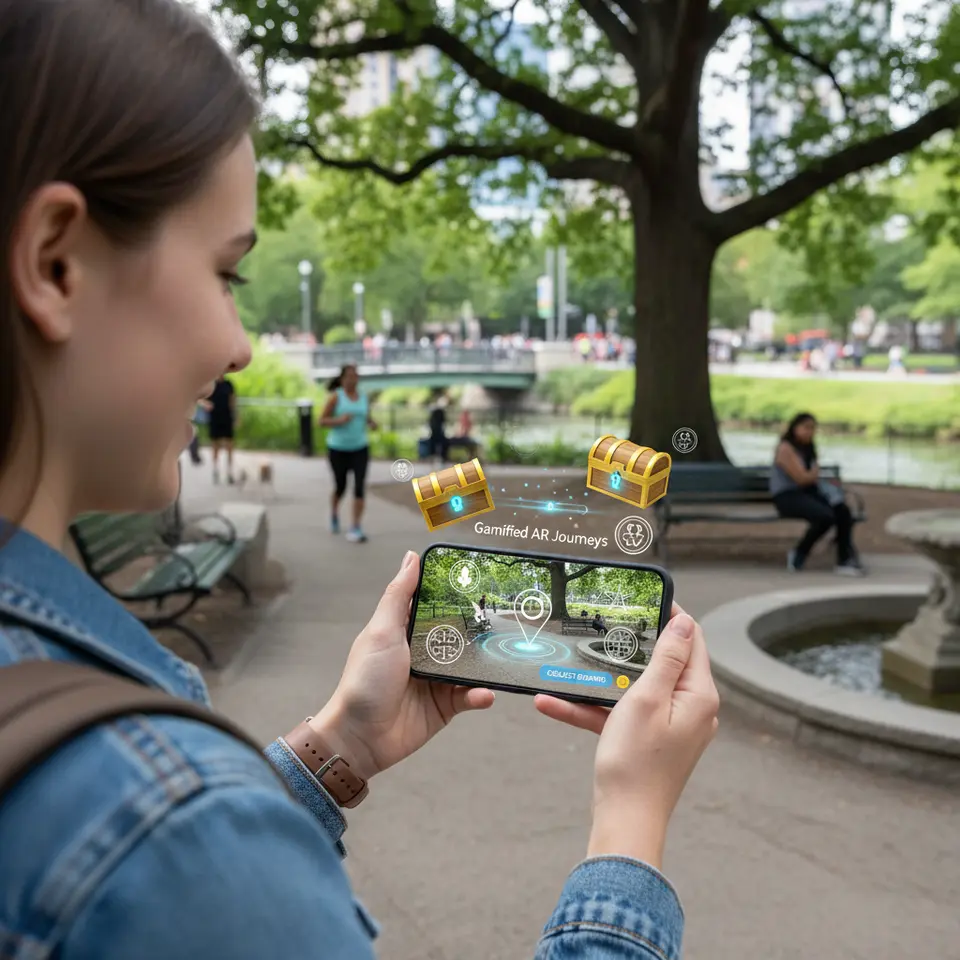
Gamified AR Journeys
Design treasure hunts, puzzles, or point-collection challenges that unfold in augmented reality. By completing tasks, users unlock in-app rewards, exclusive content, or real-world incentives. Gamification boosts motivation and repeat engagement, transforming casual app users into brand advocates who return regularly to pursue new objectives.
Interactive Storytelling
Craft narrative-driven AR sequences that guide users through a brand story. By delivering scripted scenes, character interactions, or information overlays in a linear flow, you can educate prospects about product features or brand values in an engaging, memorable manner. This method is particularly effective for apps in tourism, education, and entertainment sectors.
By combining these tactics within an integrated AR app marketing strategy, you can offer diverse touchpoints that resonate with varying user motivations—whether they seek entertainment, discovery, or practical utility.
Selecting the Right AR Tools and Platforms
Choosing a robust technology stack is crucial for delivering high-quality AR experiences. Today, several mature frameworks and platforms cater to different development needs:
Native SDKs: ARKit and ARCore
For iOS and Android respectively, Apple’s ARKit and Google’s ARCore provide comprehensive native toolsets to leverage device-specific hardware capabilities. These SDKs support plane detection, environmental understanding, and realistic lighting effects. By integrating these frameworks, you ensure optimal performance and native feature support.
Cross-Platform Engines: Unity and Unreal Engine
Developers seeking to build once and deploy across multiple operating systems often turn to Unity or Unreal Engine. Both platforms offer specialized AR add-ons—Unity Reflect and Unreal’s AR templates—that streamline content creation, asset management, and cross-device optimization. These engines also support advanced graphics and physics simulations for immersive realism.
Social AR Studios
Platforms like Spark AR Studio and Lens Studio enable rapid development and deployment of social filters and lenses without extensive coding. Ideal for marketing teams on tight timelines, these tools integrate directly with social networks, simplifying the path from concept to audience engagement.
Analytics and Measurement Tools
Complement your AR development stack with analytics solutions that record spatial interactions, session flows, and conversion events. Dashboards from platforms such as Mixpanel, Firebase Analytics, or custom BI tools allow you to visualize performance metrics, segment audiences, and iterate on your campaigns based on real user data.
When selecting tools, evaluate your team’s technical expertise, budget constraints, and target platforms. A balanced mix of native SDKs for core functionality, cross-platform engines for efficiency, and social AR studios for viral reach will position your AR app marketing initiative for success.
Implementing Your AR App Marketing Campaign Step-by-Step
A structured rollout plan ensures smooth execution and measurable outcomes. Follow these phases to guide your AR app marketing efforts:
1. Define Clear Objectives
Identify primary KPIs—app downloads, session length, social shares, or in-app purchases. Align these goals with overall business objectives to maintain focus throughout development and promotion.
2. Conceptualize and Storyboard
Sketch user journeys that outline each AR interaction. Define entry points, call-to-action triggers, and progression paths. This storyboard becomes the blueprint for designers, developers, and marketers.
3. Prototype and Validate
Build a minimum viable AR prototype to gather early feedback. Conduct user testing sessions to uncover usability issues, performance bottlenecks, and feature requests. Refining the prototype at this stage reduces costly rework later on.
4. Develop and Integrate
Leverage chosen SDKs and engines to build the full AR experience. Ensure seamless integration with your existing app infrastructure—authentication, payment gateways, and analytics. Optimize assets for performance, and implement graceful fallbacks for unsupported devices.
5. Launch and Promote
Coordinate a cross-channel marketing push: social media teasers, email newsletters, in-app notifications, influencer collaborations, and paid ads. Highlight key AR features and benefits to entice both new and existing users.
6. Monitor Performance and Iterate
Use real-time dashboards to track engagement rates, conversion uplifts, user feedback, and technical metrics like crash rates. Identify underperforming elements and rapidly deploy updates. Continuous iteration based on data insights ensures long-term campaign vitality.
By following this step-by-step framework, you can minimize risks, optimize resources, and deliver a polished AR app marketing campaign that resonates with your target audience.
FAQ
What makes AR app marketing effective?
AR app marketing enhances user engagement by offering interactive, immersive experiences that traditional ads can’t match. Users can visualize products in their environment, participate in gamified activities, and share unique content, all of which drive deeper connections and higher conversion rates.
Which AR tactics suit e-commerce apps?
Virtual product placement and AR-powered try-ons are particularly effective for e-commerce. These features allow shoppers to preview products like furniture or apparel in real-world settings, reducing purchase hesitation and returns.
How do I measure AR campaign success?
Key metrics include app downloads, session length, feature engagement rates (e.g., number of AR interactions), social shares, and conversion lifts. Integrate analytics tools such as Mixpanel or Firebase to capture spatial interactions and user flow data for ongoing optimization.
Can small teams implement AR effectively?
Yes. Leveraging social AR studios (Spark AR, Lens Studio) and cross-platform engines (Unity, Unreal) can accelerate development without large budgets. Start with simple prototypes, gather user feedback, and iterate to expand functionality over time.
Conclusion
AR app marketing has matured into a potent strategy for driving user engagement, boosting conversions, and generating organic buzz in today’s competitive app ecosystem. By understanding the technological advancements behind AR, recognizing its core benefits, and adopting proven tactics—from branded filters to gamified journeys—you can craft experiences that stand out in crowded app stores. Selecting the right mix of native SDKs, cross-platform engines, and analytics tools empowers your team to build scalable, high-performance AR content. Following a structured implementation plan—spanning objective setting, prototyping, development, launch, and continuous optimization—ensures measurable results and sustainable growth.
This year (2026), invest in AR app marketing to capitalize on users’ appetite for immersive digital interactions. With careful planning, creative storytelling, and data-driven iteration, you’ll not only elevate your app’s visibility but also forge lasting connections with your audience. Start experimenting with AR today to stay ahead of the curve and deliver unforgettable experiences that drive long-term success.