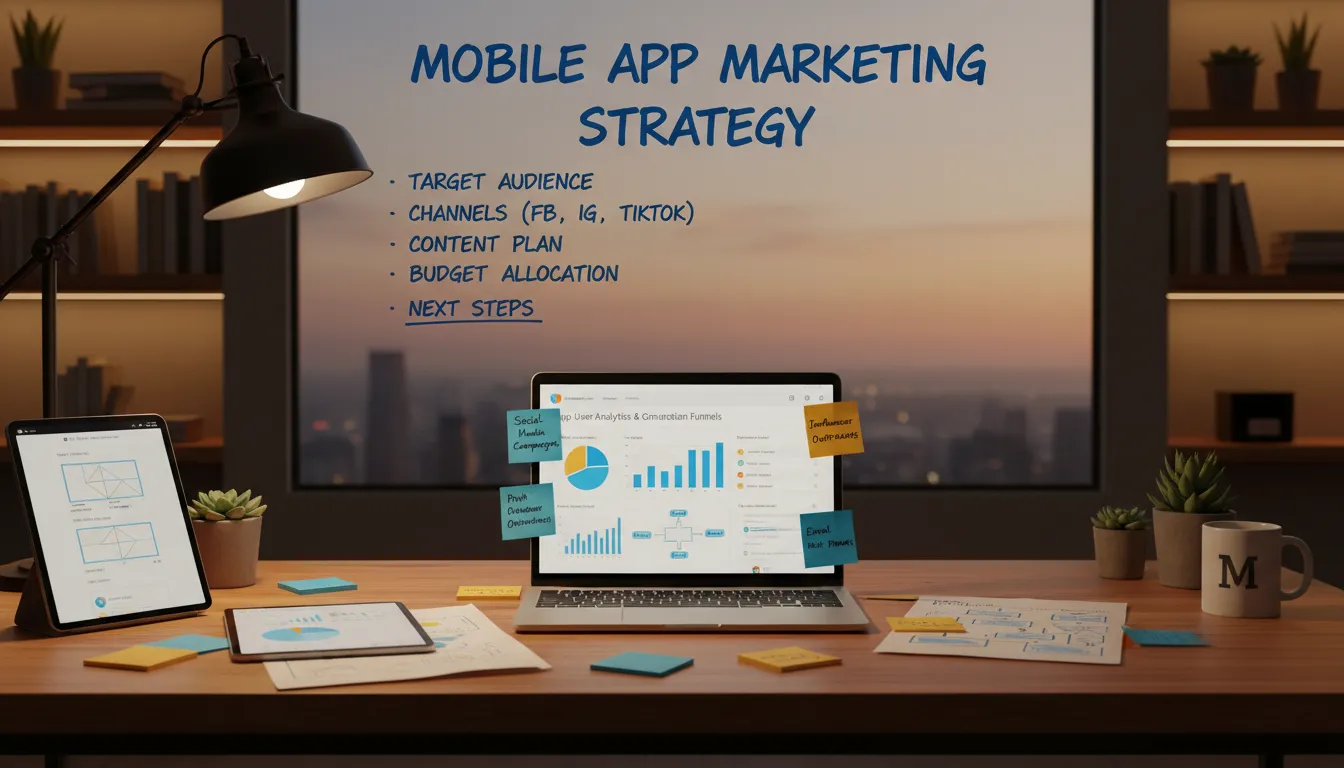
This comprehensive guide breaks down the core components of a successful mobile application strategy. We cover essential pre-launch preparations for marketing mobile apps, App Store Optimization, paid acquisition, organic growth, and retention tactics to help you scale your user base and achieve long-term profitability.
Marketing mobile apps requires a precise blend of data analysis, creative positioning, and strategic execution. Successfully marketing mobile apps means understanding your target audience to drive sustainable app growth and maximize conversions.
The Foundation of Marketing Mobile Apps
Understanding the foundational elements of marketing mobile apps is critical before spending a single dollar on advertising. The landscape is fiercely competitive, with millions of applications vying for user attention across the Apple App Store and Google Play Store. Success depends on a holistic approach that seamlessly integrates product development with promotional strategies for marketing mobile apps.
You need to establish a clear mobile go-to-market plan that identifies your ideal users, their pain points, and how your software solves those specific problems. This requires deep market research, competitor analysis, and a firm grasp of your unique value proposition. Building user personas is the first step in marketing mobile apps. When you know exactly who you are targeting, you can tailor your messaging, design choices, and acquisition channels to match their preferences.
Furthermore, you must integrate tracking and analytics infrastructure during the development phase. Tools like Mixpanel or Firebase allow you to monitor user behavior, track events, and measure the success of your marketing mobile apps campaigns. Launching without proper attribution models in place means flying blind—marketing mobile apps requires knowing which channels drive the highest quality users and where those users drop off in your onboarding funnel.
Key Pre-Launch Strategies

A successful launch for marketing mobile apps begins months before your application hits the store. The pre-launch phase is about building anticipation, gathering feedback, and establishing an initial user base that will propel your product up the charts on day one.
Build a Conversion-Optimized Landing Page
Your website serves as the central hub for your early promotional efforts in marketing mobile apps. Create a landing page that clearly articulates your value proposition, showcases high-quality screenshots, and captures email addresses. This allows you to build a waitlist of eager users who will download your product immediately upon release. Offer early access or exclusive perks to incentivize sign-ups for your marketing mobile apps campaign.
Execute Beta Testing
Beta testing is not just for finding bugs; it is a powerful promotional tool for marketing mobile apps. Invite your waitlist subscribers to participate in a closed beta through TestFlight or the Google Play Console. These early adopters provide invaluable feedback on your retention strategies and user experience. They often become your most loyal advocates, leaving positive reviews on launch day and driving word-of-mouth growth for your marketing mobile apps efforts.
Leverage Public Relations and Outreach
Reach out to tech journalists, industry bloggers, and influencers who cover your niche. Prepare a comprehensive press kit that includes high-resolution assets, a demo video, founder bios, and a compelling press release. Building relationships with the media early ensures you secure coverage when your product officially launches, which is vital for marketing mobile apps to a broader audience.
Mastering App Store Optimization (ASO)
App Store Optimization (ASO) is the practice of improving your visibility within the app stores. Since a significant portion of downloads comes directly from store searches, mastering ASO is non-negotiable for marketing mobile apps organically.
Keyword Research and Implementation
Identify the terms your potential users type into the search bar. Use tools to find high-volume, low-competition keywords relevant to your niche. For iOS, place your strongest keywords in the title and subtitle. For Android, incorporate them naturally throughout your full description. Avoid keyword stuffing, as algorithms penalize unnatural language in marketing mobile apps descriptions.
Optimizing Visual Assets
Your icon, screenshots, and preview videos are the most critical conversion factors on your product page. Design a clean, recognizable icon that stands out against competitors. Use your screenshots to tell a story, highlighting the most important features and benefits with clear, legible text overlays. A short, engaging video preview can significantly boost your conversion rate by showing exactly how the software functions—essential in marketing mobile apps effectively.
Ratings and Reviews Management
The volume and quality of your reviews directly impact your store ranking. Implement an intelligent rating prompt that asks for feedback only after a user experiences a positive moment—such as completing a task or achieving a milestone. Respond to all reviews, both positive and negative, to show users that you actively maintain the product and value their input. This level of engagement is a cornerstone of successful marketing of mobile apps.
Paid User Acquisition Tactics

While organic growth is essential, paid user acquisition allows you to scale rapidly and target specific demographics with precision in marketing mobile apps.
Apple Search Ads and Google App Campaigns
These platforms capture users who have high intent. Apple Search Ads place your product at the top of relevant iOS search results, making it one of the most effective acquisition channels for marketing mobile apps. Google App Campaigns utilize machine learning to distribute your ads across Google Search, YouTube, and the Google Display Network, automatically optimizing bids and creatives to find users most likely to convert.
Social Media Advertising
Platforms like Facebook, Instagram, and TikTok offer unparalleled demographic and behavioral targeting. Use engaging video creatives that demonstrate your value proposition within the first three seconds. Test different ad formats, such as playable ads or user-generated content, to see what resonates best with your audience. Continuously monitor your Cost Per Install (CPI) and Return on Ad Spend (ROAS) to ensure profitability for marketing mobile apps.
Influencer Partnerships
Collaborating with creators helps you tap into established, trusting communities—a proven technique for marketing mobile apps. Identify micro-influencers whose audiences align perfectly with your target demographic. Sponsor dedicated review videos, social media shoutouts, or integrated tutorials. Provide influencers with trackable links or unique promo codes to measure the direct impact of their campaigns on your user acquisition efforts.
Organic Growth and Retention Strategies
Acquiring users is only half the battle in marketing mobile apps; retaining them is where true profitability lies. High churn rates can destroy your marketing budget. You must implement robust app monetization and retention loops to maximize customer lifetime value with your marketing mobile apps efforts.
Streamlined Onboarding
The first few minutes after a download dictate whether a user stays or deletes your product. Design a frictionless onboarding flow that guides users to their first “aha” moment as quickly as possible. Minimize the number of steps required to create an account and delay requesting intrusive permissions until necessary. Marketing mobile apps with seamless onboarding increases your chances of converting new users to loyal customers.
Push Notifications and In-App Messaging
Use push notifications strategically to re-engage dormant users. Personalize your messages based on user behavior and preferences rather than sending generic blasts. For example, remind an e-commerce user about an abandoned cart or congratulate a fitness user on a new milestone. In-app messaging helps guide users through complex features and highlights new updates while they are actively engaged. When marketing mobile apps, timely messaging keeps users invested.
Referral Programs
Incentivize your existing users to invite their friends. A well-designed referral program offers mutual benefits—such as premium features, discounts, or virtual currency—to both the referrer and the new user. Make the sharing process seamless by integrating deep links that take the new user directly to the promised reward upon installation. Referral efforts are among the most effective organic tactics in marketing mobile apps for viral growth.
Comparing Acquisition Channels
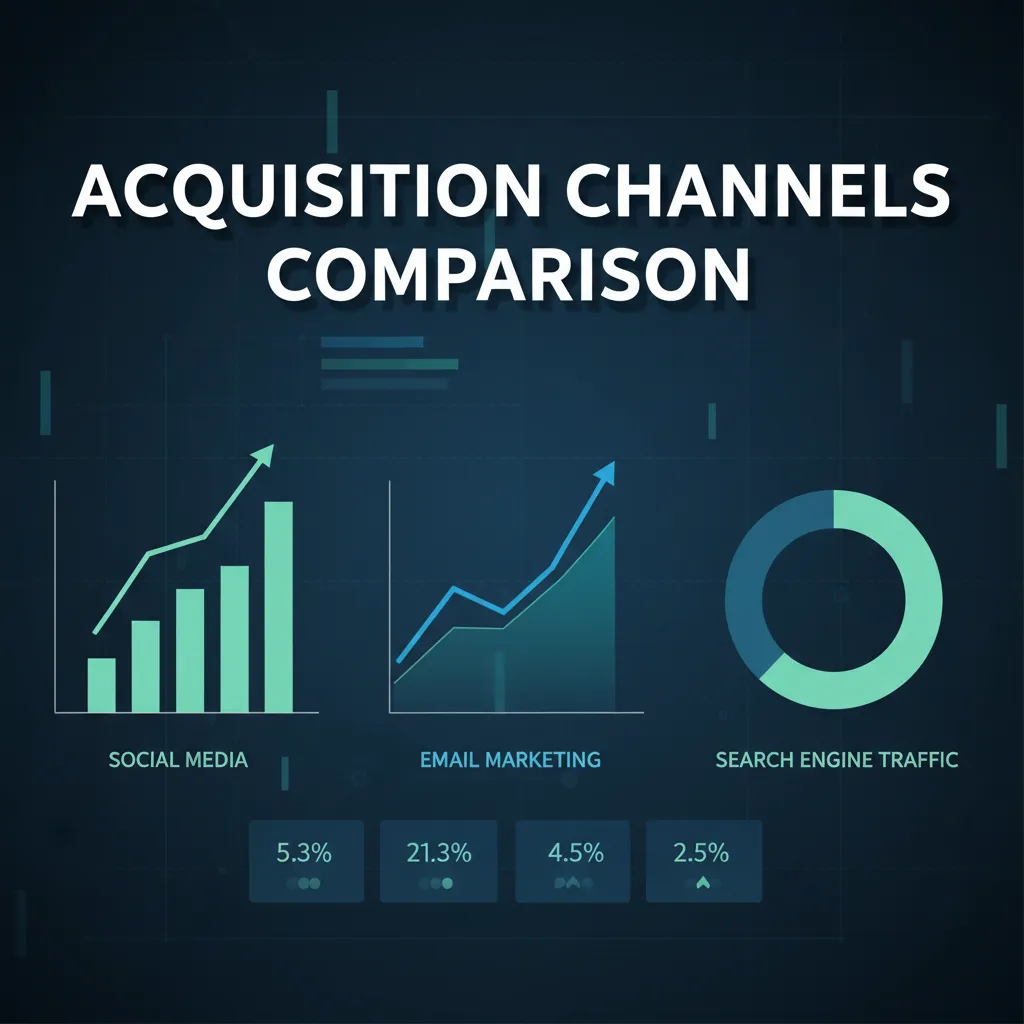
Understanding where to allocate your budget is vital when marketing mobile apps. The table below compares the primary acquisition channels used when marketing mobile apps.
|
Channel |
Cost Level |
Targeting Precision |
Best Use Case |
|---|---|---|---|
|
App Store Optimization (ASO) |
Low |
High (Intent-based) |
Long-term organic growth and visibility |
|
Apple Search Ads |
Medium to High |
Very High (Keyword intent) |
Capturing users actively searching for solutions |
|
Social Media Ads |
Medium |
High (Demographic/Behavioral) |
Brand awareness and rapid scaling |
|
Influencer Marketing |
Variable |
Medium to High |
Building trust and demonstrating features |
|
Referral Programs |
Low |
High (Social proof) |
Viral growth and lowering overall CAC |
Common Mistakes to Avoid
Even experienced marketers make critical errors that hinder growth. Avoid these common pitfalls to ensure your strategy remains effective in marketing mobile apps.
- Ignoring the Onboarding Experience: Spending thousands on acquisition only to lose users due to a confusing interface wastes your budget. Always test and optimize your onboarding flow.
- Treating ASO as a One-Time Task: Search algorithms and competitor strategies change constantly. You must update your keywords, screenshots, and descriptions regularly to maintain your rankings.
- Failing to Track Core Metrics: If you do not monitor your retention rates, churn, and Customer Acquisition Cost (CAC), you cannot make data-driven decisions. Implement comprehensive analytics from day one.
- Overusing Push Notifications: Bombarding users with irrelevant alerts leads to high uninstall rates. Always segment your audience and send notifications that provide genuine value in marketing mobile apps.
Pro Tips and Expert Insights
To elevate your approach to marketing mobile apps, consider these advanced tactics used by industry leaders.
- Focus on Incrementality: Do not just look at raw installation numbers. Use incrementality testing to understand the true impact of your paid campaigns compared to organic baseline growth.
- Leverage Custom Product Pages: Use Apple’s Custom Product Pages to create tailored store listings for different ad campaigns. Matching your store page messaging to your ad creative significantly boosts conversion rates.
- Optimize for Voice Search: As more users rely on virtual assistants, incorporating conversational, long-tail keywords into your ASO strategy helps capture voice-driven traffic and keeps marketing mobile apps ahead of the curve.
- Embrace Predictive Analytics: Utilize machine learning models to identify users who are likely to churn before they actually leave. Target these at-risk users with special offers or re-engagement campaigns. This is quickly becoming a leading edge in marketing mobile apps.
Advanced Monetization and User Value

Your promotional efforts must align perfectly with your revenue model. Whether you utilize subscriptions, freemium tiers, or in-app advertising, your marketing mobile apps strategy should attract users who are willing to convert.
Segment your audience based on their purchasing behavior. Create lookalike audiences on social media platforms modeled after your highest-paying customers. This ensures your ad spend goes toward acquiring high-value users rather than individuals who will never generate revenue. Regularly test your paywall designs, pricing tiers, and promotional offers to maximize your Average Revenue Per User (ARPU). Connect with a reputable mobile measurement partner to track these financial metrics accurately across all your marketing mobile app campaigns.
Scaling Your Operations
Once you establish a profitable acquisition funnel, it is time to scale your marketing mobile apps efforts. Expanding into new geographic markets requires careful localization of your assets, metadata, and advertising creatives. Translating text is not enough; you must adapt your messaging to align with local cultural nuances and preferences when marketing mobile apps worldwide.
Furthermore, continuously diversify your channel mix. Relying solely on one advertising platform leaves your business vulnerable to algorithm changes and rising ad costs. Test emerging networks, explore connected TV advertising, and invest in content marketing to build a resilient, multi-channel growth engine for marketing mobile apps.
Marketing mobile apps demands continuous optimization, rigorous testing, and a deep understanding of user psychology. By combining data-driven acquisition tactics with exceptional user experiences, you build a sustainable growth loop. Focus on delivering genuine value, track your performance metrics relentlessly, and adapt your strategies to stay ahead in this dynamic industry.
Conclusion
To excel at marketing mobile apps in today’s hyper-competitive landscape, commit to a holistic, data-backed, and adaptive strategy. Success in marketing mobile apps hinges on seamless onboarding, smart App Store Optimization, effective paid and organic user acquisition, robust retention, and ongoing optimization. By integrating market research, precision in execution, and actionable analytics into every phase, your marketing mobile app campaigns will attract, engage, and retain valuable users. Stay proactive with emerging trends, test new tactics, and prioritize user value above all to ensure that your marketing mobile apps strategy drives lasting growth and business success.
FAQs
What are the most important metrics to track for mobile applications?
You should closely monitor Customer Acquisition Cost (CAC), Lifetime Value (LTV), Day 1/7/30 Retention Rates, Average Revenue Per User (ARPU), and Churn Rate. These metrics dictate your profitability when marketing mobile apps.
How long does it take to see results from App Store Optimization?
ASO is a long-term strategy. While keyword updates can show slight shifts within a few days, substantial changes in ranking and organic download volume typically take three to four weeks to materialize fully when marketing mobile apps.
Should I launch on iOS and Android simultaneously?
It depends on your resources. Many startups prefer a soft launch on one platform to test retention and fix bugs before committing to a global, dual-platform release—an approach often used when marketing mobile apps.
What is a soft launch?
A soft launch involves releasing your product in a smaller, restricted geographic market. This allows you to test your server infrastructure, monetization models, and user onboarding before a full public release, a smart move in marketing mobile apps.
How can I lower my Cost Per Install (CPI)?
Lower your CPI by continually A/B testing your advertising creatives, refining your audience targeting, optimizing your app store page for higher conversion rates, and expanding into less competitive ad networks in your marketing mobile apps campaigns.
Why do users uninstall applications so quickly?
High uninstall rates usually stem from forced account creation, excessive push notifications, crashing bugs, or misleading advertising that sets incorrect user expectations—major pain points to avoid in marketing mobile apps.
What is the difference between organic and paid acquisition?
Organic acquisition refers to users finding your software naturally through store searches, word of mouth, or content marketing without direct ad spend. Paid acquisition involves buying ads to drive installations; balancing both is key in marketing mobile apps.
How effective are video ads for user acquisition?
Video ads are highly effective because they demonstrate functionality and user interface in seconds. They typically yield higher engagement and conversion rates compared to static image ads, an increasingly prominent strategy in marketing mobile apps.
How do I get more positive reviews?
Implement a smart rating prompt that asks for a review only after the user experiences a success moment within the software. Ensure you provide excellent customer support to resolve issues before they become negative reviews—a vital component of marketing mobile apps.
Is email marketing relevant for mobile products?
Absolutely. Collecting email addresses via your landing page allows you to send targeted onboarding sequences, feature updates, and re-engagement campaigns directly to a user’s inbox without relying on push notifications. Email remains central to marketing mobile apps.